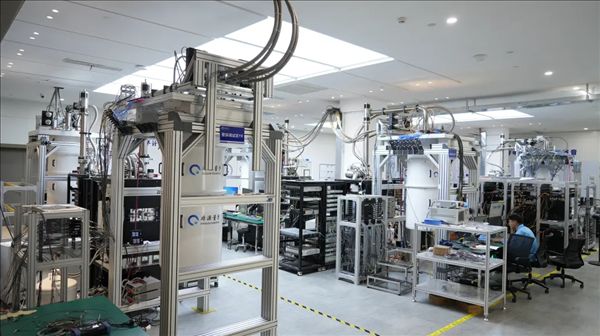
Xiaomi 18 Fold Three Major Debuts: Xuanjie 03 + ChangXin LPDDR6 Memory + HyperOS 4

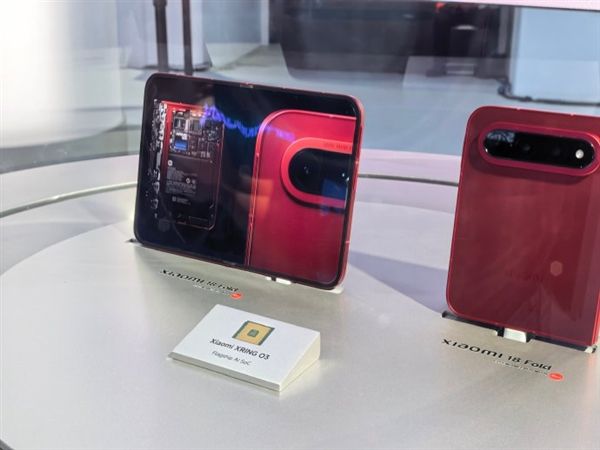
Xiaomi 18 Fold has officially begun preheating. Today, the company announced that the new device will debut with the Xuanjie O3, the industry's first AI flagship SoC to exceed 5 million points in benchmarks.
It also supports next-generation LPDDR6 memory with bandwidth up to 113.8GB/s, and debuts Xiaomi HyperOS 4, doubling efficiency for a seamless experience.
Xiaomi claims the 18 Fold delivers "stable frame rates and sustained cool performance during a 1-hour heavy-load challenge on the large screen."
The Xuanjie O3 is Xiaomi's next-generation self-developed SoC. Limited by process constraints, it is still built on 3nm, but its overall performance outclasses chips on the same node and may even rival upcoming 2nm processors.
The CPU adopts a ten-core all-big-core design, featuring C1-Ultra + C1-Premium + C1-Pro, with a peak clock speed of 4.35GHz. Multi-core scores break the 15,000 mark for the first time, a 60% performance boost.
The GPU debuts a 16-core G2-Ultra NX graphics processor, an unprecedented generational leap with an 85% performance increase, making it the most powerful mobile graphics solution to date. Benchmark results completely crush the A19 Pro, while power consumption drops 64% compared to the previous generation.
The Xuanjie O3 is also the world's first mobile processor to support LPDDR6, debuting with ChangXin LPDDR6 memory, combining a self-developed SoC with domestically produced next-gen memory for a dual-domestic-core-component setup.
Paired with HyperOS 4, the Xiaomi 18 Fold delivers the strongest performance and smoothest experience in Xiaomi phone history.
One of the biggest upgrades in Xiaomi HyperOS 4 is fluidity. The company states it is "seamless from start to finish," introducing load-precision computing and memory preloading technologies, paired with a dedicated app runtime environment.
Real-world test data shows that after 9 hours of continuous use, the total launch time for 30 apps is 17.5% faster than HyperOS 3. Camera cold-start time drops from 1043.6ms to 808.8ms, rear HDR photo capture is 23% faster, and the average frame-drop rate during prolonged short-video scrolling is just 0.11%. High-load desktop animations and portrait-landscape transitions remain perfectly smooth with no stuttering.
Related Articles

Huawei Mate 90 series has entered the network: directly marked as 5G! Debuting the Taolaw-compliant Kirin chip.
1 day ago

Acer launches Aspire G 3D 16 laptop: Strix Halo chip with glasses-free 3D display support.
1 day ago
Xiaomi's most premium phone to date! Xiaomi 18 Fold wide-folding real machine unveiled: powered by Xuanjie O3, will it start at 10,000 yuan?
1 day ago