China's auto exports are booming, but has shipping become the bottleneck? Transport vessels are in short supply.
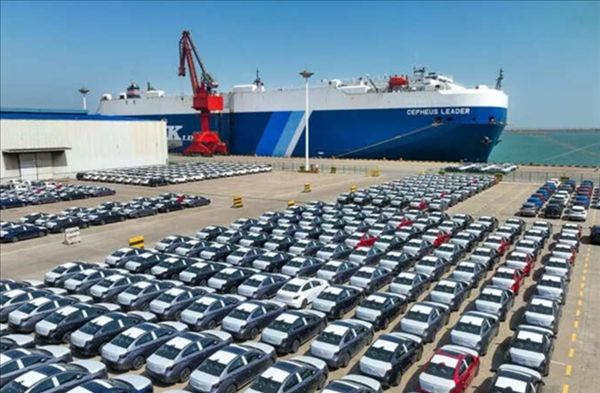
After achieving the milestone of "one in every ten newly registered cars in Europe is Chinese" this year, the unprecedented scale of Chinese automakers' exports has even left the global shipping industry struggling to keep up...
Industry insiders say that to transport new cars produced in Chinese factories overseas, bookings for specialized car carrier vessels—often called "floating parking lots at sea"—have been reserved years in advance. Meanwhile, driven by the strong demand from China's auto exports, charter rates have surged 65% this year. This niche segment of the shipping industry is facing the dual challenge of soaring freight costs and a severe shortage of capacity.
Desperate to get vehicles to Europe, Australia, and Latin America, some automakers have even had to settle for a less ideal option: stuffing cars into standard containers normally used for furniture, clothing, and electronics.
"The strength of this shipping niche is astonishing, and it's entirely thanks to the unprecedented explosive growth in Chinese car exports," marveled Lasse Kristoffersen, CEO of Wallenius Wilhelmsen, the world's largest car carrier fleet, during an earnings call earlier this year.
To meet this demand, carriers have launched a record-breaking ship-buying spree in recent years. Kristoffersen revealed that even though the global car carrier fleet has expanded by about 40%, it still cannot fill China's capacity gap.
Could China's auto exports surpass 10 million this year?
According to data from research firm Mobility Global, China exported fewer than 600,000 cars and vans in 2019; this year, the firm predicts that figure will soar to a staggering 10 million.
Data from the European Automobile Manufacturers' Association shows that in the first half of 2026, SAIC Motor's new car registrations in the EU grew 19%, while BYD's more than doubled. Meanwhile, traditional European competitors have stagnated: Stellantis grew just 6%, Volkswagen edged up 2.6%, and Renault fell 4.2%.
"In just five years, China has transformed from a negligible player into the world's largest car exporter," said Andreas Enger, CEO of Norwegian car carrier company Höegh Autoliners.
Enger added that this export boom has pushed car shipping rates to twice pre-pandemic levels.
Industry executives had previously expected charter rates to decline this year as a wave of new vessels came online—between 2022 and 2025, companies ordered billions of dollars' worth of car carriers as consumer car spending surged and Chinese auto exports began to grow rapidly. Capacity demand had pushed charter rates to a peak of $115,000 per day from late 2023 to early 2024.
However, because shipping companies still struggle to meet demand—largely due to the sheer speed of China's export growth—charter rates have instead surged again. According to data from shipbroker Clarksons, annual charter rates for large car carriers averaged $70,000 per day in June, well above the $42,500 at the end of last year.
Settling for less! More automakers turning to container exports?
Currently, global car shipping by sea relies primarily on three methods:
The most common is, of course, dedicated car carriers—the most efficient way to transport thousands of vehicles across oceans. Cars can be driven on and off ships quickly and conveniently, and stored in layers onboard like a floating parking lot. This minimizes transport costs and reduces the risk of damage.
The second method is shipping vehicles in containers. This is more costly and labor-intensive. Carriers must first load two to four cars into a single container, which is then lifted aboard by crane. Industry consensus holds that this process makes vehicles more prone to damage.
The third, relatively rarer method, uses specialized racking systems. Vehicles are secured to custom metal frames and lifted by crane into the holds of general cargo ships. These frames can be stacked, allowing ordinary freighters to carry hundreds of cars on a single voyage.
Eric Dessupoiu, Vice President of Finished Vehicle Logistics at French company Ceva Logistics, said automakers prefer car carriers because the cost of rolling vehicles on and off ships is lower than other methods, and the risk of damage is smaller. However, Dessupoiu also noted that when there's no alternative, automakers have no choice but to accept container shipping.
Kristoffersen of Wallenius Wilhelmsen said at Tuesday's earnings release that up to 4 million cars are currently exported from China each year via containers or other alternatives to car carriers.
In fact, shipping cars in containers isn't new, but it was rarely used on a massive scale to transport thousands of vehicles. That changed during the COVID-19 pandemic, when car shipping demand outpaced vessel supply.
Christoph Seitz, Global Vice President of Finished Vehicle Logistics at Dubai-based freight forwarder DP World, said, "Some Western automakers are skeptical about putting cars in containers, but Chinese automakers don't hesitate—they tend to think, 'If there's capacity, we'll take it all!'"
Cars shipped in containers must first be transported to facilities near the port, loaded into containers there, and then lifted onto the ship by crane. At the destination port, the process must be repeated in reverse. Seitz said container shipping of cars has become so common that major container lines like Maersk and MSC have begun selling their services directly to automakers.
Faced with such overwhelming export capacity demand, some Chinese automakers have even begun building their own fleets. BYD launched its first dedicated car carrier in 2024 and now operates a fleet of eight vessels.
Clearly, from obscurity to rewriting global shipping rules, Chinese automakers going global is not just a victory in production and sales—it has triggered a chain reaction involving maritime logistics, supply chain restructuring, and even the shipbuilding industry.
As more specialized carriers are delivered in the coming years, this "Age of Exploration" led by Chinese innovation is just getting started. At a time when the global automotive industry landscape is rapidly reshaping, how to unblock logistics bottlenecks and gain a voice in maritime capacity is becoming the new battleground for Chinese automakers to win overseas markets.
Related Articles
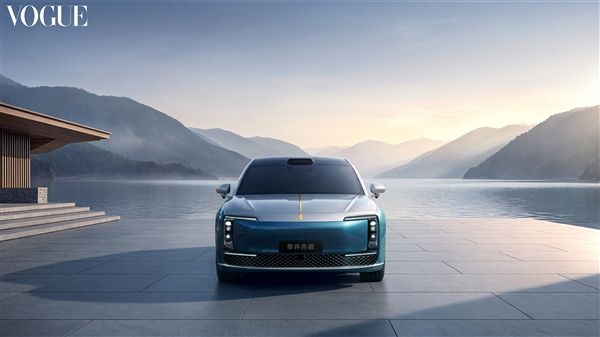
Starting at 1.388 million yuan, Zunjie S800 Grand Design Collection officially delivered
about 3 hours ago
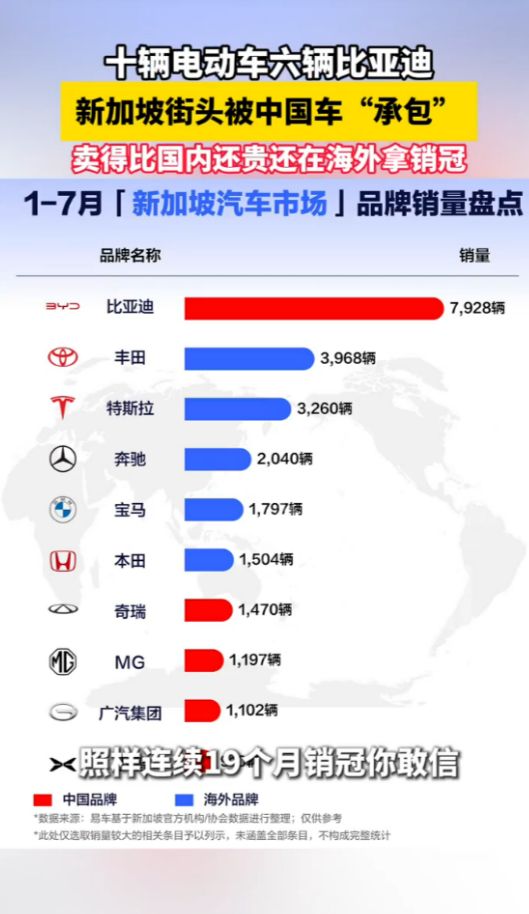
6 out of every 10 electric vehicles are BYD! Chinese cars dominate overseas markets: foreigners queue up to take delivery.
2 days ago
BYD released its 2026 semi-annual financial report: exports surged 67.9% to nearly 790,000 vehicles!
3 days ago