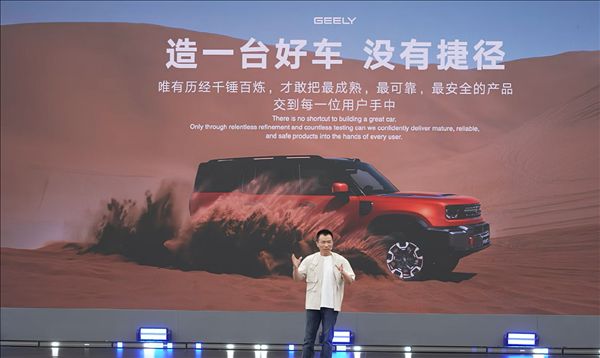
Joint venture automakers' share in China falls to 24.5%: German, Japanese, US, Korean automakers not spared.

Recently, the 2026 China Automotive Forum sub-forum "Brand Breakthrough Strategies in the New Joint Venture Era" was held. Wang Qian, Deputy General Manager of Sales at Dongfeng Nissan, released a set of highly impactful industry data on site: In June this year, the overall market share of joint venture and foreign auto brands was only 24.5%.
He lamented that the market share had fallen below a quarter, a situation that was completely unimaginable three years ago, but is now the real state of the industry.
The domestic automotive market share pattern has completely reversed in five years. In 2020, joint venture brands accounted for 61.6% of the market, while domestic brands only had 38.4%; in the first half of 2026, domestic brand passenger cars sold a cumulative 9.138 million units, with share rising to 71.8%, and the combined share of joint ventures and foreign brands shrank to 28.2%.
The four major joint venture camps of Germany, Japan, the US, and South Korea all saw year-on-year sales declines in the first half of the year. Many automakers that once sold over a million vehicles annually are now struggling to exceed 50,000 monthly sales. Mainstream brands such as Volkswagen, BMW, Mercedes-Benz, and Honda all experienced double-digit sales drops, making the industry downturn a common phenomenon.
The core issue behind the share decline is the lag in new energy transformation. In the fuel vehicle segment, joint venture brands still hold a 66% market share, but the pace of domestic electrification is far ahead of the layout rhythm of foreign brands.
In June, the retail penetration rate of new energy vehicles in China reached 62.8%, with domestic brand new energy penetration as high as 81.8%, while mainstream joint venture brand new energy penetration was only 11.9%.
The drawbacks of the traditional joint venture model are becoming evident: overseas-dominated R&D, lengthy decision-making chains, insufficient localization of the supply chain, product iteration speed unable to keep up with the domestic market's two-year generation update cycle, and smart features that fail to meet local user needs.
Facing the industry shift, major joint venture automakers have initiated localization transformation. Dongfeng Nissan has implemented a local decision-making R&D model, with new energy vehicle sales exceeding 100,000 units in half a year; Beijing Hyundai has built a thousand-strong local R&D team, collaborating with domestic tech companies to deploy smart electric products.
Industry experts suggest that joint venture brands have not lost their development window; rather, their development path has shifted from overseas technology introduction to local independent R&D.
Related Articles
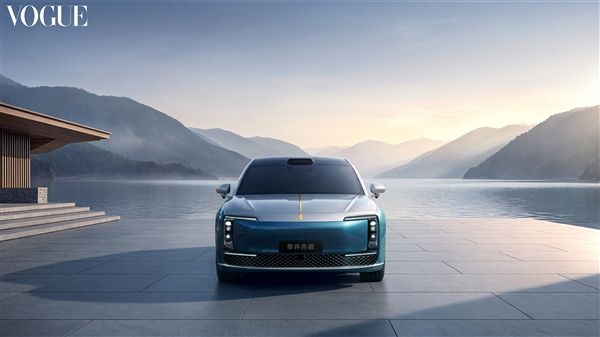
Starting at 1.388 million yuan, Zunjie S800 Grand Design Collection officially delivered
about 2 hours ago
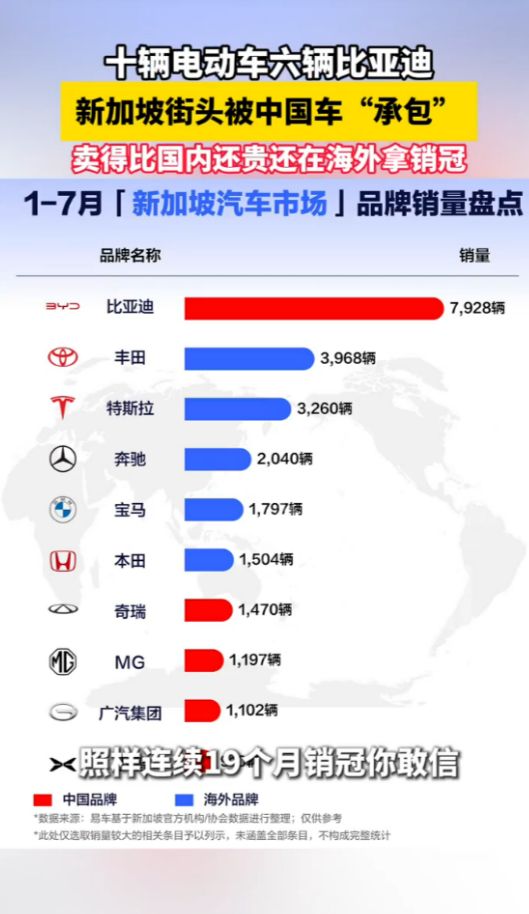
6 out of every 10 electric vehicles are BYD! Chinese cars dominate overseas markets: foreigners queue up to take delivery.
2 days ago
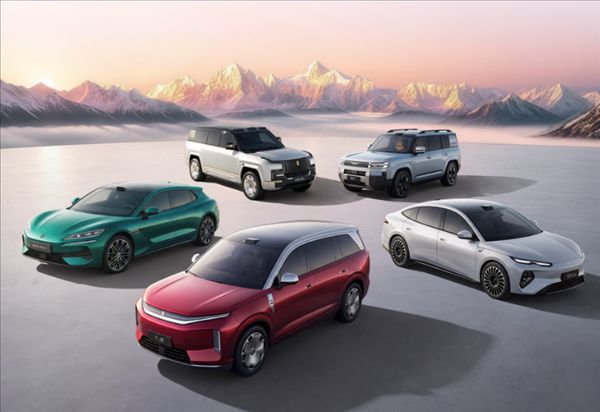
BYD released its 2026 semi-annual financial report: exports surged 67.9% to nearly 790,000 vehicles!
3 days ago