
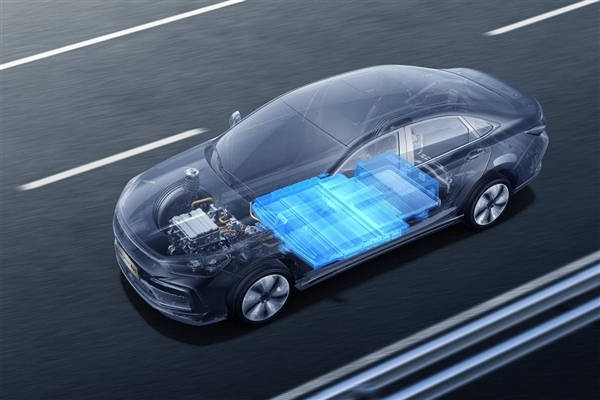
October 16, 2025 — Chinese researchers have achieved a major breakthrough in all-solid-state lithium-metal battery technology, overcoming a critical bottleneck that has long limited performance. The innovation could enable electric vehicles to travel over 1,000 kilometers on a 100 kg battery pack, doubling the range of current lithium-ion systems.
According to CCTV News, multiple research teams across China have made coordinated advances that solve the key issue of poor contact between solid electrodes and electrolytes — often described as the “ceramic plate and clay” problem. Three core innovations are now paving the way for large-scale commercialization of next-generation solid-state batteries.
1. “Iodine Ion Glue” from the Institute of Physics, Chinese Academy of Sciences
A joint research group led by the Institute of Physics, Chinese Academy of Sciences developed a novel “special glue” based on iodine ions.
When the battery operates, these iodine ions act like “traffic police”, moving along the electric field to the interface between the electrode and solid electrolyte. They attract passing lithium ions and flow into micro-gaps and pores, automatically filling them like quicksand.
This self-adjusting mechanism allows the electrode and electrolyte layers to bond tightly without additional processing, solving one of the toughest challenges in making practical all-solid-state batteries.
2. “Flexible Transformation” from the Institute of Metal Research, Chinese Academy of Sciences
A second team from the Institute of Metal Research, CAS developed a polymer-supported flexible framework for solid electrolytes. This structure gives the electrolyte the toughness of an upgraded “cling film”, able to withstand stretching, twisting, and bending over 20,000 times without damage.
The researchers also embedded special chemical components into the framework: some accelerate lithium-ion transport, while others capture and store additional ions. Together, these improvements boosted the battery’s energy storage capacity by 86%, dramatically enhancing both flexibility and performance.
3. “Fluorine Reinforcement” from Tsinghua University
Meanwhile, a Tsinghua University research group introduced fluorinated polyether materials into the solid electrolyte to strengthen its high-voltage resistance. The resulting fluoride protective layer on the electrode surface prevents electric breakdown under high voltage, significantly improving both safety and durability.
Tests showed that even under full charge, puncture simulation, and 120°C high-temperature conditions, the battery remained stable and did not explode — ensuring “dual reliability in safety and endurance.”
A Leap Toward Next-Generation Energy Systems
These combined breakthroughs mark a major leap forward for China’s solid-state battery research. With the successful integration of iodine-ion interfaces, flexible polymer skeletons, and fluorine-reinforced electrolytes, scientists have effectively addressed the solid–solid interface bottleneck that has hindered commercialization for years.
The progress opens vast potential for applications in electric vehicles, low-altitude aerial mobility, and high-energy-density storage systems, positioning China at the forefront of the global race toward next-generation solid-state lithium batteries.

