Nvidia stumbles, Huawei and other domestic chips feast! GPUs are becoming less and less scarce in China.
Nvidia has completely vacated China's advanced AI computing market, and domestic chip makers like Huawei have seized the massive void left behind, ushering in unprecedented growth opportunities.
Yesterday, Tencent executives disclosed during their latest earnings call that Tencent Cloud has been steadily advancing its proprietary computing layout this year. By the end of this year to early next year, its available GPU computing resources are expected to reach a highly sufficient state, significantly boosting its cloud service supply capacity.
The company stated it is closely tracking new business opportunities in areas like GPU computing power and model-as-a-service. Going forward, it will centrally coordinate and allocate computing resources across its entire platform, balancing internal demand for large model R&D with external cloud computing rental needs, maximizing overall resource utilization.
Earlier, Nvidia founder Jensen Huang admitted in a public interview that due to escalating US chip export restrictions, Nvidia's share of China's advanced AI accelerator market had plummeted from a near-monopoly of roughly 95% to nearly zero.
Huang directly added that they had fully exited China's high-end AI computing market, and the domestic AI accelerator chip market, once almost entirely dominated by Nvidia, no longer sees its mainstream products.
This near-total market vacuum has handed domestic AI chip makers an ideal window to strike. Recently, multiple domestic GPU manufacturers including Huawei and Moore Threads have been rapidly iterating products and expanding delivery volumes, steadily increasing their market share and gradually filling the massive gap left by Nvidia.
Objectively speaking, while the absolute paper performance of many domestic computing chips still lags behind Nvidia's top-tier offerings, the deep collaborative optimization between domestic large model vendors and local chips can largely compensate for pure performance gaps in real-world commercial scenarios.
Additionally, domestic computing vendors typically provide more stable and sufficient power supply support—a core competitive advantage foreign products completely lack. Huawei's recently launched super-node computing solution is a typical example of deeply integrating these strengths.
Related Articles
Huawei phone users have finally got what they've been waiting for! The HarmonyOS trial beta version of NetEase Cloud Music is now available.
about 4 hours ago
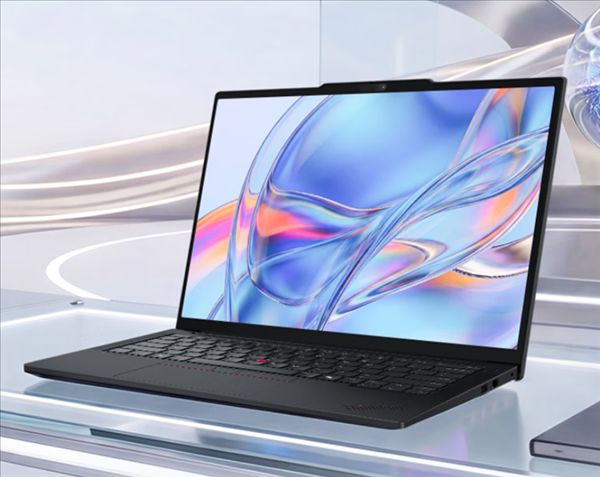
The price after discounts is 6544 yuan! Lenovo ThinkPad E14 2026 laptop is now available: Core 5 320 + 512GB
about 5 hours ago