Nvidia acquires Hugging Face for $12.9 billion
Nvidia is acquiring Hugging Face for $12.9 billion.
Foreign media broke the news first on August 26 local time. Just two days earlier, the story was that Hugging Face was "exploring a sale" — and suddenly it became "both parties have reached an agreement." The speed was almost too fast to process.
This is no ordinary AI company acquisition. It marks the first time the chip king has reached for the "distribution rights" of the open-source AI world.
Hugging Face is known as the "GitHub of AI." It hosts over 3 million model repositories, serves 13 million developers, and houses Meta's Llama, Alibaba's Qwen, and Mistral's open-source models. It is the de facto "default distribution layer" of the entire open-source AI ecosystem.
Nvidia, meanwhile, already monopolizes GPU hardware for training and inference.
Now it wants to own the road through which models flow.
01 Rolling in AI money
Let's talk numbers first. Hugging Face's last funding round was a Series D in August 2023, led by Salesforce with $235 million, at a $4.5 billion valuation. Google, Nvidia, Amazon, IBM, Intel, AMD, and Qualcomm all participated in that round. Three years later, the $12.9 billion price tag is roughly three times that valuation.
At first glance, tripling sounds dramatic. But in the context of AI industry valuation bubbles, this premium is actually restrained. Perplexity is currently raising at a valuation above $30 billion, and Anthropic and OpenAI are valued at two orders of magnitude above their revenue.
Hugging Face's ARR, estimated by Sacra, reached $150 million by August 2026 — a fivefold increase from roughly $30 million in 2023. With 50,000 enterprise customers and 769 employees, CEO Clément Delangue recently said on a podcast that the company is "close to profitability."
But the $12.9 billion price isn't buying Hugging Face's revenue — it's buying its position in the AI world.
This logic is closer to IBM's $34 billion acquisition of Red Hat in 2019 — a strategic buyer paying for a position in the developer ecosystem, not for near-term cash flow.
02 Nvidia's bigger ambition
If you read this acquisition merely as "a chip company buying a model hosting platform," you're missing the point.
Over the past year, Nvidia's investment in open-source AI has been surprisingly aggressive.
At the GTC conference in March, Jensen Huang announced the formation of the "Nemotron Alliance," a global collaboration of eight AI labs including Mistral AI, Perplexity, Cursor, and LangChain, with the goal of jointly developing frontier-level open-source foundation models. Nvidia committed $26 billion over five years to this effort, as disclosed in SEC filings.
It is the largest financial commitment to open-source AI in history.
The first model built by the alliance will become the foundation of the Nemotron 4 series. According to foreign media reports in early August, the largest Nemotron 4 version is expected to reach trillion-parameter scale, directly competing with the world's strongest open and closed-source models. Before that, Nvidia had already released the Nemotron 3 series, including Nemotron 3 Super (120 billion parameters, 12 billion active parameters) released in March, and Nemotron 3.5 Lightning, a lightweight open-source model that runs on a single GPU, released in August.
Jensen Huang has personally stepped up to defend open-source models.
In July, he posted his first message on X, publicly championing open-source AI, right as political debates in the U.S. over national security concerns related to Moonshot AI's Kimi K3 model were reaching a fever pitch. His stance was clear: "Free AI is good for hardware. Free AI is good for chips."
In plain terms, Nvidia's underlying logic for pushing open source is identical to Google's with Android — make the software free, and use the software ecosystem to drive hardware sales. Every developer building products on open-source models needs Nvidia GPUs for training and inference. More models mean more users, which means more chip demand.
Now, with Hugging Face in its pocket, Nvidia isn't just "providing the hardware to train open-source models" — it directly owns the place where open-source models "live."
03 Embodied AI: the bigger chess move
But Nvidia's appetite extends beyond language models and code generation.
Also at GTC this year, Jensen Huang unveiled Isaac GR00T N1, touted as the world's first open-source general-purpose humanoid robot foundation model. At GTC Taipei in June, he introduced the Isaac GR00T reference humanoid robot — a complete open-source hardware reference design built on Unitree's H2 Plus humanoid chassis, Sharpa's five-finger dexterous hand, the Jetson Thor compute platform, and the full Isaac GR00T software stack. Stanford, ETH Zurich, the Allen Institute for AI, and UCSD are already among the first partner institutions.
Meanwhile, Cosmos 3, released in late May, is Nvidia's first fully open-source "omni-modal model," designed specifically for "physical AI" — that is, AI that controls robots, autonomous vehicles, and other machines operating in the physical world. The autonomous driving inference model Alpamayo, released at CES in January, is also open source.
Connecting the dots, Nvidia is building a complete "physical AI" open-source ecosystem. From world models (Cosmos) to robot foundation models (GR00T N1) to simulation engines (Isaac Sim), hardware reference designs, and all the way to edge computing chips (Jetson Thor) — full-stack coverage, all open source or open access.
Huang said in Taipei: "Humanoid robots will bring physical AI to the world's largest industries, unlocking a multi-trillion-dollar economic opportunity."
And Hugging Face happens to be the default platform where robot researchers worldwide share models, datasets, and tools. Once Nvidia owns this distribution layer, its embodied AI open-source ecosystem transforms from "scattered parts" into a "fully integrated closed loop." Training on Nvidia GPUs, models hosted on a platform Nvidia owns, running on Nvidia chips, controlling robots powered by Nvidia compute.
04 The "neutral platform" question
The biggest concern on everyone's mind is Hugging Face's "neutrality."
Back in January, reports emerged that Hugging Face had turned down a $5 billion investment from Nvidia, primarily because the founding team worried that tying themselves too closely to one chip giant would undermine the platform's neutrality among competitors like AMD and Intel.
But seven months later, they chose to accept the $12.9 billion acquisition.
The developer community's concerns are real. One X user put it bluntly: "One way to suppress the open-source path is to let Hugging Face be acquired by a big company." The platform hosts a large number of open-source models from Chinese companies — DeepSeek, Alibaba's Qwen, and others are already among the most downloaded models on Hugging Face in multiple categories. Can a platform owned by an American chip giant continue to serve as a globally neutral AI model distribution hub?
History offers two reference points. When Microsoft acquired GitHub for $7.5 billion in 2018, developers panicked and fled — but Microsoft ultimately maintained GitHub's independent operations and open ecosystem, making it better rather than worse. IBM, after buying Red Hat for $34 billion in 2019, also committed to preserving its open-source culture. These acquisitions ultimately proved that "absorbing" an open-source platform doesn't necessarily mean "closing it off."
But Nvidia's situation has one fundamental difference.
When Microsoft acquired GitHub, Microsoft wasn't a monopolist in the developer tools market. When IBM acquired Red Hat, IBM wasn't the absolute dominant player in enterprise computing either.
Nvidia, however, holds more than 80% of the AI GPU market.
A player that monopolizes hardware simultaneously owning the largest distribution platform for open-source software — regulators will inevitably scrutinize this closely.
The cash-to-stock ratio, retention arrangements for the core R&D team, and how the platform's open-source commitments will be preserved — none of these deal details have been disclosed yet. These details will determine whether this acquisition is a natural expansion of the ecosystem or a vertical integration that shakes the industry.
From the $26 billion Nemotron Alliance to trillion-parameter models, from GR00T robots to the Cosmos world model, and now $12.9 billion for Hugging Face — Nvidia's moves over the past six months trace a clear line.
It is no longer satisfied with just selling shovels to gold miners. It wants to own the gold mine itself. Or more precisely, it wants to own the entire supply chain from the mine to the distribution market.
What does this mean for the AI industry? When the world's most powerful AI infrastructure company begins to simultaneously control hardware, models, distribution platforms, and robot development stacks, the meaning of the word "open source" may need to be redefined.
Related Articles

Huawei phone users have finally got what they've been waiting for! The HarmonyOS trial beta version of NetEase Cloud Music is now available.
about 2 hours ago
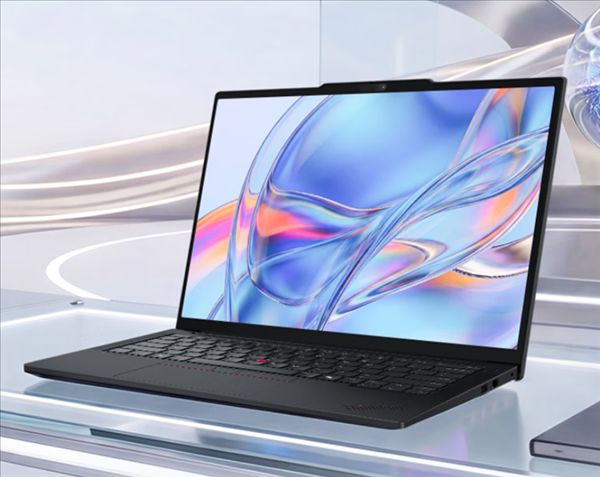
The price after discounts is 6544 yuan! Lenovo ThinkPad E14 2026 laptop is now available: Core 5 320 + 512GB
about 4 hours ago