Apple wants to buy memory chips to raise self-sufficiency to 50%, but Chinese storage manufacturers show no willingness for large-scale supply, prioritizing domestic companies' needs.
August 28 news, there have been industry rumors that Apple and other overseas tech giants intend to purchase Chinese domestic storage chips on a large scale, but based on the latest industry feedback, the possibility of such large-scale cooperation materializing is essentially negligible. On one hand, there is direct intervention from US policies; on the more fundamental level, the underlying logic is that China's storage industry prioritizes ensuring domestic demand first.
According to industry insiders involved in supply chain planning, leading domestic storage manufacturers currently have no strong willingness to supply Apple on a large scale. Entering Apple's supply chain, for them, merely serves as a touchstone proving that their DRAM, NAND Flash, and non-structured flash memory product quality has caught up with international top-tier manufacturers—more of a technical milestone significance.
Rather than expending massive production capacity and adaptation resources to compete for Apple's orders, the core operational goal of domestic storage manufacturers right now is to steadily expand production capacity, continuously raise the domestic self-sufficiency rate of Chinese-made storage chips, and prioritize supplying limited capacity to the growing domestic market demand, without disrupting their own industry rhythm for overseas orders.
Driven by the current global AI industry boom, demand for high-capacity storage chips across the industry has surged, and global storage chip supply remains in a tight balance. Many downstream manufacturers are willing to offer purchase prices far above normal levels to lock in capacity.
Although there have been reports that the US government is internally considering a limited approval of Apple's application to purchase Chinese storage chips, US domestic storage giants represented by Micron strongly oppose this. They believe that relaxing related procurement restrictions would indirectly help Chinese storage companies rapidly refine their supply chain coordination systems and improve process stability for mass production, which in turn would squeeze the long-term market share of US storage manufacturers.
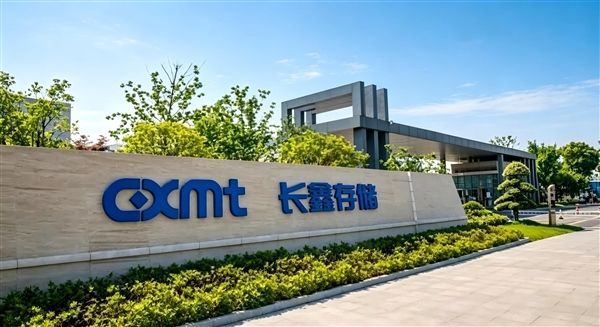
According to sources familiar with relevant planning, CXMT and YMTC, the two core domestic storage manufacturers, inherently carry the industry goal of achieving full self-sufficiency in storage chips. They are currently advancing new rounds of financing to continuously expand their own production capacity. Based on current progress, they could potentially raise the domestic market self-sufficiency rate of Chinese storage chips to over 50% between the end of 2027 and 2028.
Amid the current global memory supply crunch, many overseas downstream buyers are willing to pay higher premiums to lock in capacity in advance. Domestic storage manufacturers have recently begun small-batch targeted shipments to Western customers, gradually expanding their share in the global cloud computing and enterprise storage markets, without needing to tie all top-tier orders to Apple alone.
The current path of prioritizing domestic demand taken by China's storage industry is the most pragmatic choice for self-reliance and controllability. There's no need to sacrifice long-term industrial security goals for the sweetness of short-term overseas orders. Once the domestic self-sufficiency rate crosses the key 50% threshold, the industry's bargaining power and risk resilience will rise to a whole new level, and its competitiveness in the global market will naturally grow in tandem.
Related Articles
Huawei phone users have finally got what they've been waiting for! The HarmonyOS trial beta version of NetEase Cloud Music is now available.
about 2 hours ago
The price after discounts is 6544 yuan! Lenovo ThinkPad E14 2026 laptop is now available: Core 5 320 + 512GB
about 4 hours ago