Next year will see the most severe storage shortage in history! SK Hynix reports earnings: half-year profit surges nearly 800%, average compensation per employee exceeds 680,000.
As a leading global player in the memory chip sector, SK Hynix's core management's assessment of industry trends carries far more weight than routine forecasts from ordinary institutions, and deserves close attention across the entire semiconductor supply chain.
Recently, SK Hynix Chairman Choi Tae-won stated in an interview with a major South Korean media outlet that next year the global memory chip market will face the most severe memory shortage in history, with the supply-demand gap far exceeding previous industry-wide expectations.
According to Choi, the current demand for high-bandwidth memory across the entire AI ecosystem has completely outpaced the company's maximum supply capacity. Nearly all core downstream customers are requesting supply volumes close to double their original purchase quantities, pushing capacity scheduling pressure to the limit.
Industry veteran analysts predict that overall AI chip demand this year is expected to grow 60% to 100% year-over-year, directly driving overall memory semiconductor market demand growth of 50% to 60%.
A single mainstream AI server requires 8 to 10 times the DRAM memory of a standard data center server, and corresponding NAND flash usage is over 3 times that of ordinary servers. The explosive buildout of computing clusters has pushed memory demand to an entirely new level.
This year, AI-driven DRAM demand has, for the first time, officially surpassed the combined demand from smartphones and PCs—the two major consumer electronics categories—becoming the largest demand pillar in the memory industry.
However, building a new memory wafer fab that meets mass production standards requires not only billions of dollars in investment but also a construction and ramp-up cycle of 2 to 3 years or more. Full capacity release can take four to five years, meaning new capacity simply cannot keep pace with the explosive growth in demand in the short term.
Tesla CEO Elon Musk also noted in a recent public interview that current global memory supply is growing at only about 20% annually, while AI-related memory demand has surged 200% year-over-year. The gap between supply and demand growth rates has become completely unbridgeable.
Currently, the three major global memory manufacturers—Samsung, SK Hynix, and Micron—are all racing to sign 3-to-5-year long-term supply agreements with top AI companies. Based on current contracting progress, by 2027 nearly 50% of global DRAM capacity will be locked in by major customers in advance. A large number of consumer electronics brands and small-to-medium industry clients may soon face the passive situation of having no supply available, and memory prices are expected to remain elevated for a long time to come.
Additionally, according to SK Hynix's latest official semi-annual financial report, driven by the surge in AI memory demand leading to simultaneous increases in volume and price, the company's performance this year has climbed to an all-time high since its founding.
The report shows that SK Hynix recorded total operating revenue of approximately 629.295 billion yuan in the first half of this year, up 230.8% year-over-year; net profit attributable to shareholders was approximately 640.03 billion yuan, a staggering 788.16% increase year-over-year; and overall gross margin reached 81.63%, up 26.24 percentage points from the same period last year, with profitability far exceeding nearly all other leading semiconductor companies.
Salary-related data disclosed in the report is also striking. In the first half of this year, the average compensation for all SK Hynix employees reached 144 million won, equivalent to approximately 687,000 yuan at current exchange rates, compared to 117 million won (about 558,000 yuan) in the same period last year—an overall salary increase of about 23%, with all employees sharing in the benefits of the industry's high prosperity.
Meanwhile, SK Hynix CEO Kwak Noh-jung received total compensation of 26.1 billion won in the first half, equivalent to approximately 125 million yuan. The compensation package includes 1.25 billion won in base salary, 20.47 billion won in performance bonuses, and 4.38 billion won in stock option exercise gains, with bonuses accounting for over 70% of total compensation, fully tied to current performance.
In terms of real R&D investment, SK Hynix's R&D spending in the first half reached 6.04 trillion won, equivalent to approximately 28.817 billion yuan—already equivalent to 90% of the company's total R&D investment for all of last year.
Of this, 5.82 trillion won was recorded as current operating expenses, while the remaining 226.6 billion won was capitalized as development costs under intangible assets. Current R&D spending accounted for 4.6% of total revenue.
SK Hynix is currently concentrating the vast majority of its R&D resources on HBM4 memory, next-generation high-performance DRAM, high-capacity DDR5 memory, 321-layer stacked NAND flash, and enterprise solid-state drives (eSSD)—all core technology directions fully aligned with AI and high-performance computing (HPC). The company aims to further widen its technological lead over competitors during this memory industry boom cycle and cement its absolute dominance in the AI memory segment.
Just how severe is this round of memory price increases? Currently, a mainstream 32GB DDR5 memory kit on the market is priced at nearly 4,000 yuan, up three to four times compared to the same period last year.
A single 16GB DDR5 module, which sold for around 450 yuan last year, is now quoted at 1,800 yuan through mainstream channels—a cumulative increase of 300%. The previously most popular 32GB DDR5 dual-channel kit for DIY PC builders, which could be purchased for just 900 yuan last year, is now commonly priced at 3,800 yuan, representing a cumulative increase of 322%.
Earlier, SK Hynix CEO Kwak Noh-jung stated in a recent interview with U.S. industry media that the global DRAM industry is about to face the most severe supply shortage in history, and the red-hot market conditions where memory supply cannot meet demand are likely to persist into the next decade.
Related Articles
Huawei phone users have finally got what they've been waiting for! The HarmonyOS trial beta version of NetEase Cloud Music is now available.
about 4 hours ago
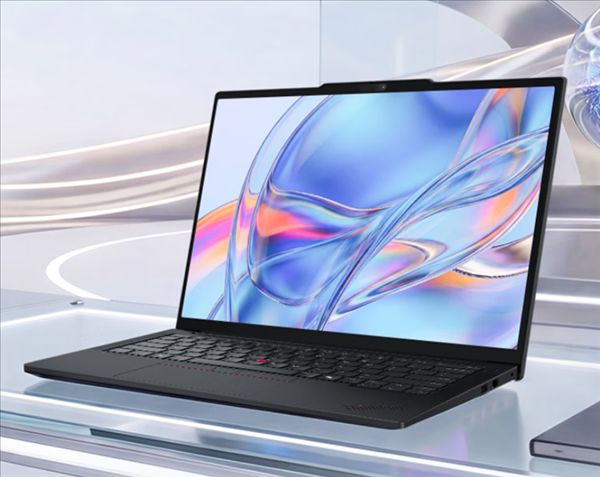
The price after discounts is 6544 yuan! Lenovo ThinkPad E14 2026 laptop is now available: Core 5 320 + 512GB
about 5 hours ago