China's FAW integrates perovskite photovoltaic technology into automotive glass, generating up to 10 kWh of electricity per day.
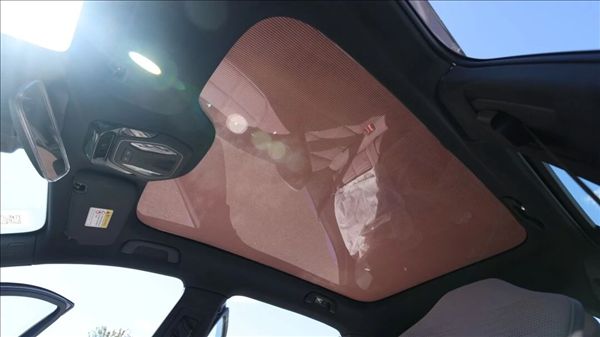
Recently, China FAW completed the preparation of the world's first perovskite photovoltaic sunroof sample, marking the first time globally that perovskite photovoltaic modules have been highly reliably integrated into double-curved automotive safety glass.
Perovskite materials are inherently sensitive to water, oxygen, and UV radiation, making it highly challenging to adapt them to the high-low temperature variations and vibration environments of vehicles, as well as to achieve curved encapsulation.
FAW overcame two major technical hurdles—moisture-oxygen barrier and curved surface lamination—through flexible module placement and multi-layer sealing encapsulation processes, achieving a seamless integration of the photovoltaic film with the panoramic sunroof.
Under sufficient sunlight, this current sunroof sample achieves a peak power generation of nearly 300 watts, with an average annual output of about 400 kilowatt-hours. This can power low-voltage devices such as parking air conditioning, in-car refrigerators, and sentry mode, reducing consumption of the traction battery and alleviating range anxiety for parked new energy vehicles.
According to official estimates, if perovskite photovoltaics are expanded in the future to cover the roof, hood, and other body glass and panels across the entire vehicle, the theoretical maximum daily power generation could reach 10 kilowatt-hours, corresponding to approximately 80 kilometers of free range extension, which could cover the short-distance commuting needs of most users.
It should be noted that the 10 kilowatt-hours per day figure represents a future goal with the entire vehicle covered in photovoltaics, not the current actual performance of a single sunroof sample. Power generation will drop significantly in cloudy or shaded conditions.
Additionally, vehicle-mounted perovskite photovoltaics serve as passive auxiliary charging and will not replace charging stations. Their primary role is to reduce low-voltage power consumption and supplement short-range endurance. Further validation is still needed regarding automotive-grade lifespan and cost control, and there remains a gap before this technology reaches consumers in production vehicles.
Related Articles

Huawei phone users have finally got what they've been waiting for! The HarmonyOS trial beta version of NetEase Cloud Music is now available.
about 3 hours ago
The price after discounts is 6544 yuan! Lenovo ThinkPad E14 2026 laptop is now available: Core 5 320 + 512GB
about 4 hours ago