
As artificial intelligence (AI) continues to advance at an unprecedented pace, the massive computational power required to train and operate large models is driving explosive growth in global data center infrastructure. While these facilities enable remarkable technological progress, they also pose significant challenges to energy sustainability and climate stability.
1. Energy Consumption and Carbon Emissions
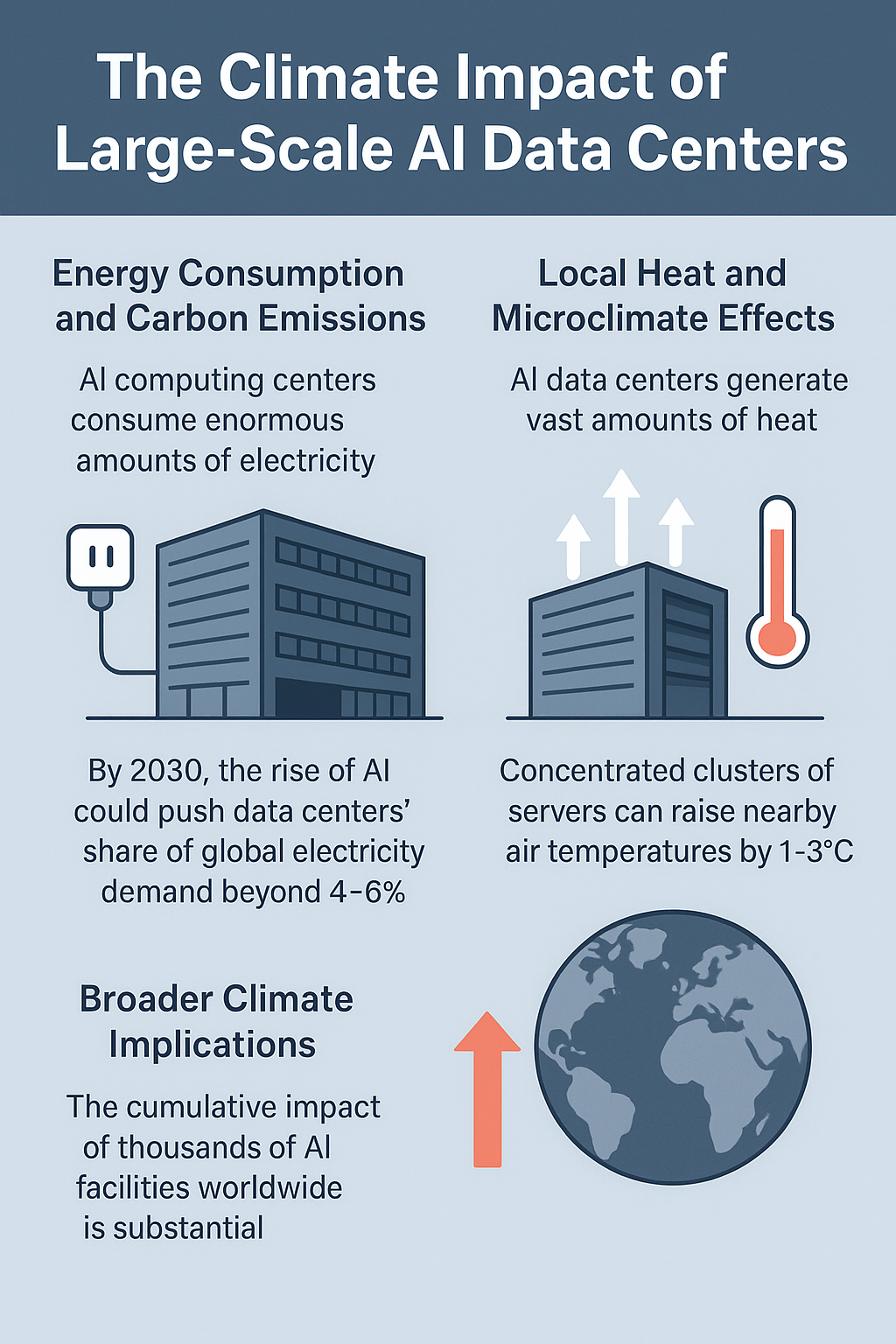
AI computing centers consume enormous amounts of electricity. Training a single large model can use tens of millions of kilowatt-hours—comparable to the annual power usage of several thousand households. According to the International Energy Agency (IEA), data centers already account for around 2–3% of global electricity demand, and the rise of AI could push that figure beyond 4–6% by 2030.
The environmental cost depends largely on how this electricity is generated. In regions where fossil fuels dominate the energy mix, each terawatt-hour of AI computation adds substantial carbon dioxide (CO₂) emissions. Current estimates suggest that the total CO₂ output from global data centers is roughly half that of the aviation industry. While major technology companies have pledged to shift toward renewable power, the short-term effect is still an overall increase in carbon emissions.
2. Local Heat and Microclimate Effects
Beyond carbon emissions, AI data centers influence local climates. These facilities generate vast amounts of heat, even with advanced cooling systems such as liquid or evaporative cooling. Concentrated clusters of servers can raise nearby air temperatures by 1–3°C, intensifying urban heat island effects.
Many AI data centers also rely on water-based cooling. A single large facility can consume millions of liters of water per day, which, once warmed and discharged, can disrupt local aquatic ecosystems—a phenomenon known as thermal pollution.
3. Broader Climate Implications
The direct warming effect of any single data center on global average temperature is minimal. However, the cumulative impact of thousands of AI facilities worldwide is substantial. Each link in the “AI energy chain”—from computation to electricity generation to CO₂ release—feeds into the global carbon cycle and amplifies greenhouse effects. The expansion of AI computing, if powered by fossil fuels, risks accelerating climate change at a time when the world urgently needs to reduce emissions.
4. Mitigation Strategies
To balance AI innovation with environmental responsibility, several solutions are emerging:
- Transition to Renewable Energy: Companies like Google and Microsoft aim for 24/7 carbon-free operations by 2030, using wind, solar, and geothermal sources.
- Improved Energy Efficiency: Advances in cooling technology, such as immersion and liquid cooling, can significantly reduce energy waste. Optimizing Power Usage Effectiveness (PUE) to below 1.1 is now a key goal.
- Geographic Optimization: Building data centers in cooler regions (e.g., Northern Europe, Canada, or Iceland) can lower cooling costs. Additionally, waste heat can be repurposed for district heating systems, turning a byproduct into a resource.
5. A Path Forward
Large-scale AI computation does not “heat the planet” directly—but through its immense demand for energy, it can exacerbate climate change unless managed responsibly. The challenge for the coming decade is to ensure that AI’s digital revolution aligns with the planet’s ecological boundaries. The future of intelligent computing must also be a future of intelligent sustainability.