The People's Daily praised Xuanjie O3 and others, and Lei Jun stated they will continue to work hard! Xiaomi is already one of the top three semiconductor companies in China by scale.
Many consumers previously didn't realize that, measured by revenue scale and R&D investment, Xiaomi has now joined the top tier of China's top three domestic semiconductor companies.
Xiaomi recently officially unveiled three new self-developed chips—the Xuanjie O3, O100, and D100. The People's Daily specifically published an article praising Xiaomi's hardcore technological breakthrough, noting that behind the achievement lies the collaborative efforts of over 20 upstream and downstream enterprises and research institutions, marking the solid pace of China's innovation moving forward with sharp ambition.
The related commentary mentioned that Xiaomi and its partner wafer foundry have been deeply intertwined in exploration, coordinating throughout the entire development process, boldly venturing into the uncharted technical territory of ultra-high-density advanced packaging for multi-layer wafers at the 6nm process node, enduring multiple rounds of failure, comprehensive troubleshooting, parameter adjustments, and repeated verification.
They ultimately conquered a technical hard nut that no one in the industry had cracked before, blazing a reusable new technical path for the entire sector. The article also emphasized that China's technological innovation has always grown from an industrial ecosystem rooted in openness, inclusiveness, and mutual benefit.
After the official media praise was published, Lei Jun responded promptly via his personal Weibo account, simply writing "Thank you all, we will continue to work hard," without overstating the achievements—a notably low-key and pragmatic stance.
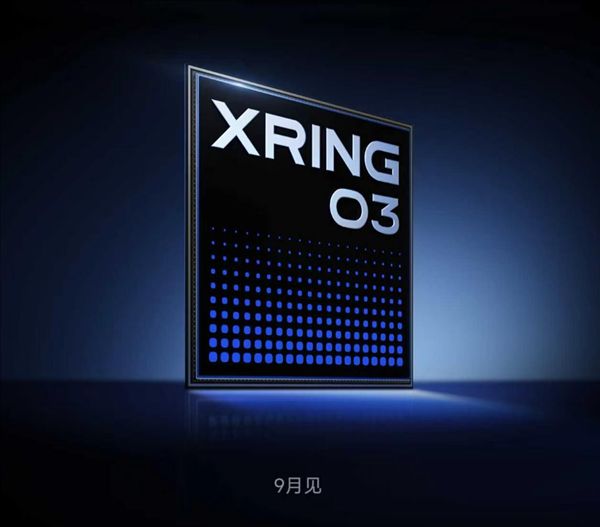
The three new self-developed chips Xiaomi released this time cover entirely different core tracks. The Xuanjie O3 targets personal smart terminal scenarios, adopting a fully independently designed 3nm advanced process, and is planned to debut on the Xiaomi 18 Fold flagship foldable phone launching in September, delivering a qualitative upgrade in mobile performance and battery life.
The O100 chip focuses on on-device AI acceleration, being the world's first mass-produced chip to successfully achieve wafer-level vertical stacking at the 6nm process, elevating on-device AI compute density to levels previously unattainable in the industry.
The D100 chip targets high-compute-demand scenarios like intelligent driving, serving as Xiaomi's independently designed 3nm ultra-high-compute AI chip, and will be fully integrated into the domain controllers of Xiaomi's smart vehicles going forward.
Earlier, Xiaomi CEO Lei Jun had publicly reviewed the development journey of Xiaomi's self-developed chips, also disclosing that over the five-plus years since restarting major chip R&D, cumulative investment has exceeded 21 billion yuan, with the current chip R&D team approaching 3,000 people. The overall self-developed chip strategy has evolved from scattered attempts to a mature, systematic phase.
Many people previously perceived Xiaomi's chip development as limited to peripheral small chips. Now, with three advanced-process chips covering flagship phones, on-device AI, and intelligent driving core scenarios entering mass production simultaneously, it directly validates the feasibility of domestic consumer electronics companies breaking through hardcore into the semiconductor upstream. The technological results from Xiaomi's 21 billion yuan in real investment also chart a new path for the entire industry—one where terminal brands drive collaborative upgrades across the upstream semiconductor sector.
Related Articles
Huawei phone users have finally got what they've been waiting for! The HarmonyOS trial beta version of NetEase Cloud Music is now available.
about 2 hours ago
The price after discounts is 6544 yuan! Lenovo ThinkPad E14 2026 laptop is now available: Core 5 320 + 512GB
about 3 hours ago