
The C919 domestically-produced large aircraft has officially begun operating on international commercial routes: no need for US or EU approval, bilateral airworthiness mutual recognition is sufficient!
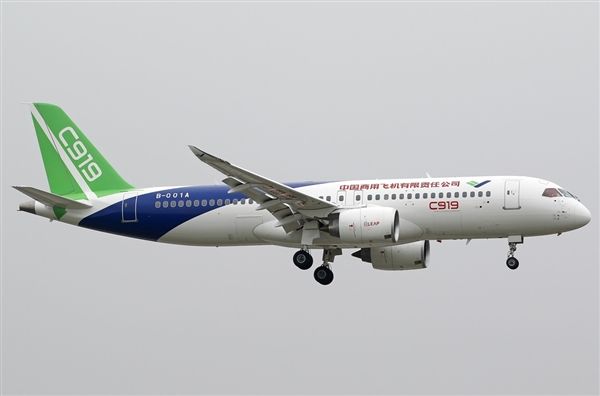
Starting today, Air China's Beijing-Ulaanbaatar route, connecting Beijing with the capital of Mongolia, will officially be operated by the domestically produced C919 large aircraft, marking a new chapter in which China's homegrown large aircraft begins regular international commercial route operations.
After the news of this new route was released, it quickly sparked widespread discussion among netizens, with many raising questions: since the C919 has not yet obtained airworthiness certification from the United States and Europe, how can it smoothly fly abroad to operate international routes?
In response to these questions, an industry insider from the civil aviation sector provided a detailed explanation: at this stage, the C919 only holds a type certificate issued by the Civil Aviation Administration of China and has not yet obtained airworthiness certification from the U.S. FAA or the European EASA, yet it remains fully legal and compliant in operating cross-border routes.
For a long time, Western media has continuously promoted a monopolistic narrative, claiming that without airworthiness permits from the U.S. and European authorities, China's domestically produced large aircraft could never enter the global market. The official launch of this China-Mongolia scheduled route directly debunks this industry myth that has been hyped for years.
According to the basic rules of the Convention on International Civil Aviation, as long as the civil aviation authorities of two countries formally sign a bilateral airworthiness mutual recognition agreement, the airworthiness qualifications officially issued by one country inherently carry legal validity for cross-border flights, with no need for additional recognition from third-party institutions.
China and Mongolia have long established a complete mutual recognition mechanism for civil aviation airworthiness standards. Mongolian authorities directly accept all certification results for the C919 issued by the Civil Aviation Administration of China, which fully complies with prevailing international civil aviation rules.
In fact, the groundwork for this route was laid well in advance. As early as July 2025, the domestically produced C909 regional jet had already been stably operating the Hohhot-Ulaanbaatar route, with ground support procedures at Genghis Khan Airport, cross-border airspace coordination rules, and operational support systems for cold-climate conditions all fully tested, paving the way for the C919's official debut.
From the perspective of experts involved in the development of China's domestically produced large aircraft, so-called airworthiness certification has long ceased to be a purely technical review process. In recent years, it has gradually evolved into a policy tool used by some Western countries to restrict the development of other nations' aviation industries and engage in industrial competition.
Related Articles

Xiaomi's first NAS! Xiaomi Smart Storage goes on sale starting at 2699 yuan, supporting up to 60TB capacity.
5 days ago

Panda 31.5-inch 2K 165Hz monitor is now available! Priced at 999 yuan.
5 days ago

Ryzen 7 powered! Feiniu four-bay NAS EVO 4 PRO will go on sale on August 26.
6 days ago