Detailed explanation of Xiaomi's four Pengcheng extended-range SUVs: The mobile home has finally been built by Xiaomi.
Xiaomi's extended-range vehicle has finally shown its hand. Lei Jun announced that at 19:00 the Pengcheng Technology Launch Event will be held, where the Kunlun Platform, extended-range safety technology, and the two new models N70Max and N90Max will officially debut.
Prior to this, test vehicles from the Pengcheng series have been spotted multiple times. Last week, a blogger captured the white version of the N90Max — with no camouflage on the body, sharp and rugged lines, a noticeable wide-body stance, and a clearly visible roof-mounted LiDAR.
This is likely the closest test vehicle to the production version. Combining official previews and reliable leaks, the configurations and strategies of the four Pengcheng models can now be largely understood. They target the market of popular 9-series SUVs such as AITO M9 and Li Auto L9, but with a completely different approach.
Four Models, Two Sizes
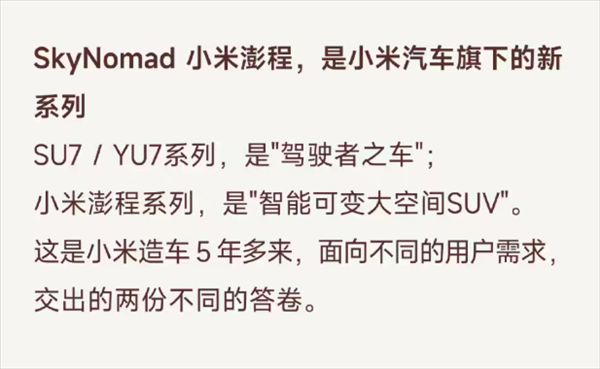
Previously, the SU7 and YU7 series focused on "thrilling driving," while Pengcheng aims for "thrilling seating and fun." The core concept is "intelligent variable large space" — through ultra-long sliding rails and rotating seats, the interior can be instantly transformed into a studio, café, living room, or even a playground.

The entire lineup shares the same design language: a closed front grille, the Xiaomi logo on the hood, cross-shaped daytime running lights, and a circular through-type taillight at the rear. Currently available in black, white, and "Mountain Green," the styling leans toward a more restrained look, given the target audience is family users.
The Pengcheng series includes four new models, all built on the Kunlun architecture. Let's go through each one.

Pengcheng N70
This is the base model with the lowest price, focused on volume sales. It measures 4960mm in length, 1998mm in width, 1785mm in height, with a wheelbase of 2950mm, which is 325mm shorter than the N90 series.

It features a single-motor rear-wheel drive, equipped with a 52kWh LFP battery (supplied by Xinwangda), providing a WLTC electric range of 265/270km. Due to its lighter curb weight and single motor, the fuel consumption when the battery is depleted is only 5.7L/100km, making it the most fuel-efficient among the four models.

In terms of power, it uses a Dongan 1.5T range extender (112kW) plus a 210kW motor, with a top speed of 190km/h. The positioning is clear: a nearly 5-meter large five-seat extended-range SUV, without all-wheel drive or a large battery, but sufficient for daily commuting, grocery shopping, and picking up kids.
Pengcheng N70Max
The dimensions are the same as the N70, with main upgrades in power and range. It also uses the Dongan 1.5T range extender, but switches to dual motors: front 100kW + rear 210kW, with a total power of 310kW.

The battery is upgraded to a 76kWh ternary lithium battery from CALB, with a CLTC electric range of 505km — this is the version Lei Jun referred to as "longest range." The corresponding WLTC range is 380km, so for daily commutes of a few dozen kilometers, one charge per week is basically stress-free.

Pengcheng N90Max
Here comes the highlight. The N90 series includes two models: N90Max and N90Max Pop-up Roof Camper Edition. They share the same dimensions: length 5285mm, width 1998mm, height 1825mm, wheelbase 3080mm.

The N90Max is available in 5-seat or 7-seat configurations, with the 7-seat version featuring zero-gravity seats in the second row as standard. Its powertrain is consistent with the N70Max: a 75kWh battery (Note: original text says 76kWh for N70Max but 75kWh for N90Max? Original states: "both use 75kWh large battery, 210kW+100kW dual-motor four-wheel drive"), dual-motor all-wheel drive, with a WLTC electric range of 370km.
Pengcheng N90Max Pop-up Roof Camper Edition
This is the most unique model in the lineup. While the other three are registered as "multi-purpose passenger vehicles," this one is registered as a "cultural living service vehicle" — simply put, it's a legally road-legal pop-up roof camper that requires no modification.

When parked in P gear, the roof can be raised, with the upper layer featuring built-in bed boards and mosquito netting. The sides have interfaces, detachable table boards, and a projection kit, all available as original factory options.

Due to the space taken up by the pop-up roof structure, this version only offers 5 seats, not 7. It has a heavier curb weight, with a WLTC range of 363km, slightly less than the regular version. But this difference is negligible — imagine driving into the mountains on a weekend, parking, raising the roof, laying out the bed board, and setting up the projector. This isn't an SUV; it's a mobile Xiaomi Home.
Standard Highlights Across the Lineup
From the submitted patent images, all four models come standard with LiDAR, ensuring a step forward in smart cockpit and driver assistance. The ultra-long sliding rails are standard on the Kunlun architecture, and the semi-hidden door handles, compliant with new national standards, can be opened mechanically even when power is cut.

What Makes Pengcheng Different?
The current full-size extended-range SUV market is highly homogenized: similar appearances and configurations that don't differ much. Pengcheng's "variable space" is its biggest differentiator — sliding rails combined with front rotating seats allow the interior to switch as needed.

Moreover, the 7-seat configuration in the Pengcheng uses a 2+2+3 layout, with the third row nearly as wide as the second, offering significantly better comfort than the common 2+3+2 layout. Even if the third row is rarely used, it can be folded down to switch to a cargo-carrying "Huolala" mode.

Electric range is another advantage. The dual-motor all-wheel-drive N70Max achieves a CLTC range of 505km, placing it in the top tier among similar models.

Of course, the human-car-home ecosystem has always been Xiaomi's unique weapon. Phones, watches, tablets, TVs, air conditioners, robot vacuums, and other devices can all connect with the Pengcheng vehicle system.

In summary, Pengcheng's approach is unique enough: variable space + intelligence + human-car-home ecosystem + pop-up roof camping, carving out a new path in the crowded 9-series SUV market.
The N70 series is responsible for volume sales, sufficient for daily family use; the N90 series targets the high-end segment with rich spatial flexibility; the camper edition directly enters the outdoor lifestyle market. As for whether this can help Xiaomi achieve its annual target of 550,000 units, we'll find out at the launch event.
Related Articles
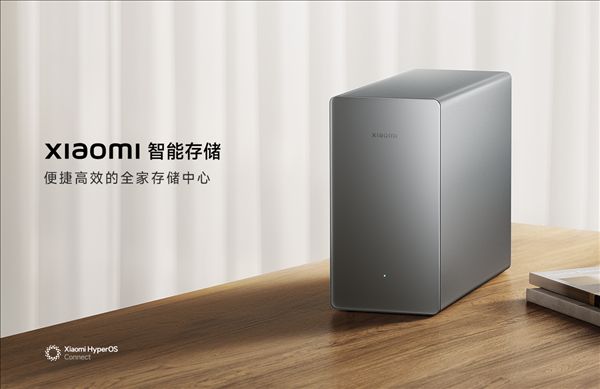
Xiaomi's first NAS! Xiaomi Smart Storage goes on sale starting at 2699 yuan, supporting up to 60TB capacity.
5 days ago
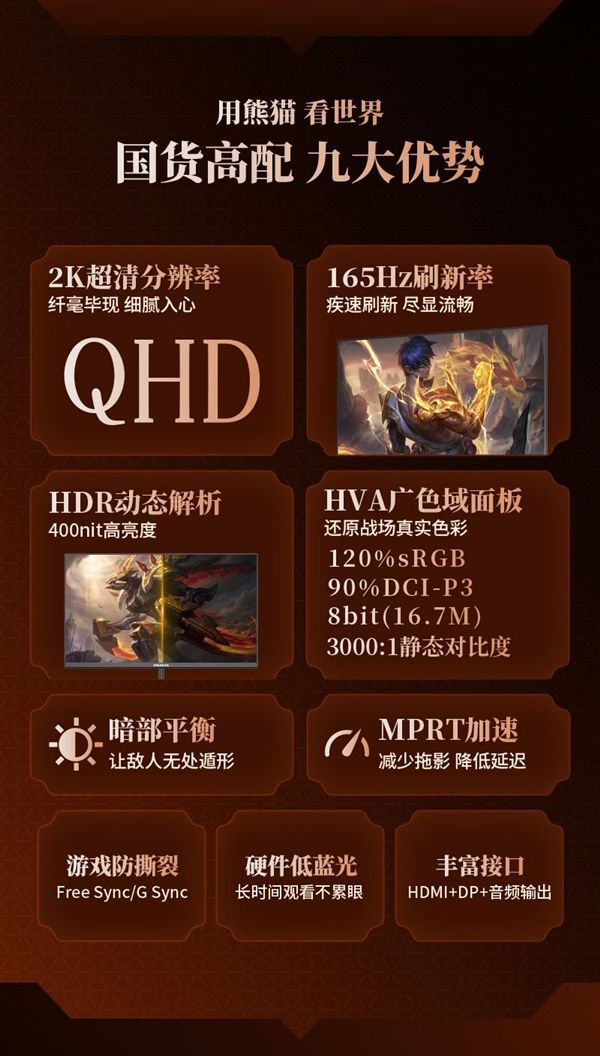
Panda 31.5-inch 2K 165Hz monitor is now available! Priced at 999 yuan.
5 days ago
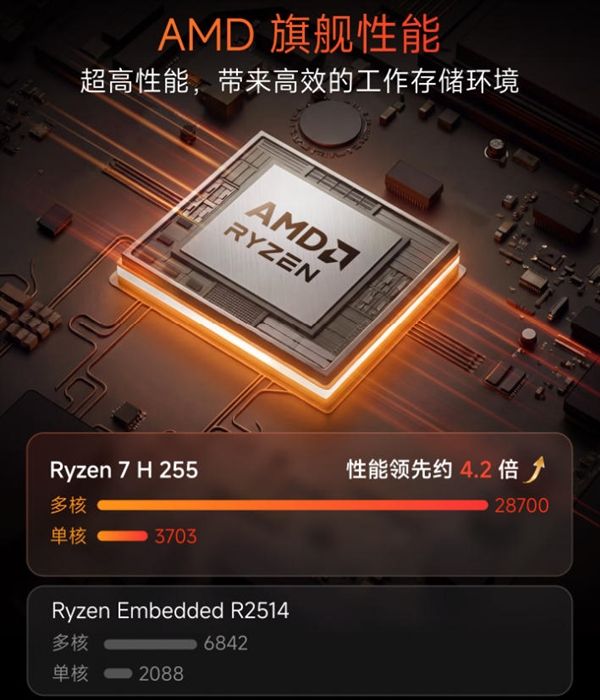
Ryzen 7 powered! Feiniu four-bay NAS EVO 4 PRO will go on sale on August 26.
6 days ago