Musk makes bold claim again: SpaceX will definitely build a factory on the moon.
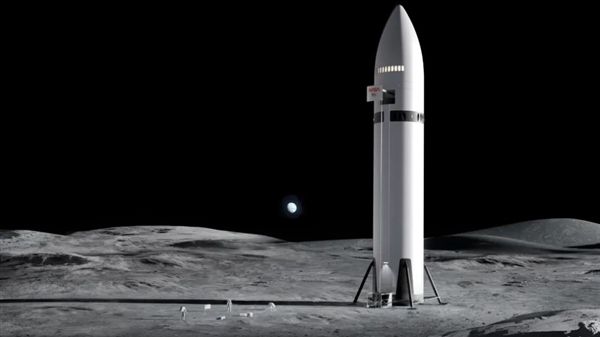
According to reports, after recently going public, SpaceX held its first quarterly earnings call, where Musk once again unveiled an extremely sci-fi space blueprint, publicly claiming that the company will eventually build an automated factory on the Moon, relying on robots to complete the entire off-Earth manufacturing process.
This idea was not proposed on the spur of the moment. As early as February this year, when Musk officially announced the acquisition of xAI, he had already disclosed the plan for building a factory on the Moon. This reiteration to investors also marks that off-Earth manufacturing has officially become a core development direction for SpaceX.
According to the plan, the core mission of the lunar factory is to mass-produce Starmind AI satellites, supporting the formation of a million-level satellite constellation network and extending deployment into deep space. Once production is complete, the satellites will be launched directly into space via an electromagnetic mass accelerator. This device, similar to a giant electromagnetic railgun, can eliminate the high fuel costs of chemical rocket launches.
Musk believes that by leveraging the Moon's local resources, solar power equipment, and heat dissipation systems, this lunar manufacturing system could expand the economic scale of the space industry to a thousand times or even a million times that of Earth.
The main workforce of the factory will be Tesla-developed Optimus humanoid robots, which will travel to the Moon aboard Starship to take on heavy tasks such as mining, construction, and assembly. In the future, similar robots will also be sent to Mars, paving the way for human off-world settlement.
As the transportation foundation of the entire plan, Starship's payload capacity can reach four times that of the Falcon 9 rocket, yet its launch cost is only one-tenth of it. SpaceX is simultaneously expanding launch facilities in multiple locations to support the demand for thousands of launches per year.
From a financial perspective, SpaceX's second-quarter revenue this year reached $7.8 billion, a year-on-year surge of 92%, while its losses narrowed significantly compared to the same period last year. The ample funds raised from the public listing provide financial support for these long-term space projects.
However, this grand blueprint still faces many practical challenges: the temperature difference between day and night on the Moon exceeds 200 degrees Celsius, charged lunar dust can easily damage precision equipment, and humanoid robots will find it difficult to independently complete the entire workflow in the short term. At the same time, the cost of transporting materials in the early stage is extremely high, and the industry generally believes that at this stage it would be more appropriate to first use small exploration robots to scout the way.

Related Articles

Huawei phone users have finally got what they've been waiting for! The HarmonyOS trial beta version of NetEase Cloud Music is now available.
about 4 hours ago

The price after discounts is 6544 yuan! Lenovo ThinkPad E14 2026 laptop is now available: Core 5 320 + 512GB
about 5 hours ago