SK Hynix invests 54 trillion Korean won to build two new wafer fabs: expanding memory capacity! Production as early as 2028
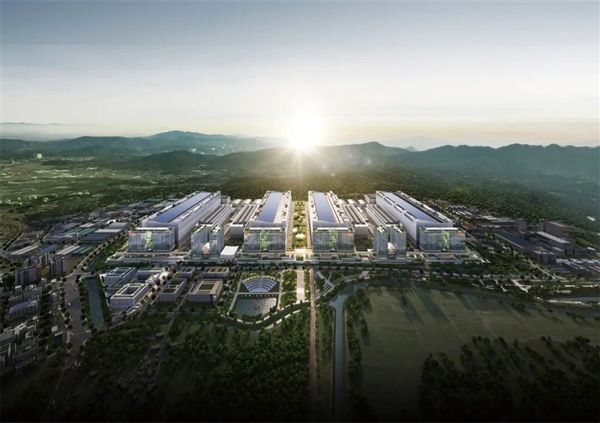
Recently, SK hynix's board of directors officially approved a large-scale factory construction investment plan, with a combined investment of approximately 54 trillion KRW (about 256.7 billion RMB), to build the Yongin Y2 DRAM wafer fab and the Cheongju M17 NAND flash wafer fab respectively, in order to match the continuously rising memory chip demand from the AI industry.
The Yongin Y2 project involves an investment of 35.2 trillion KRW (approximately 167.3 billion RMB). Located in the Yongin large-scale semiconductor industrial cluster, it is the second of four factories planned in the park, with a total construction area of approximately 1.13 million square meters. It is positioned as a high-end DRAM production base, focusing on next-generation high-bandwidth memory products such as HBM.
The project is scheduled to start construction in July 2027, with the first cleanroom to be activated in June 2029. All phased investments will extend through October 2031, with funds covering plant buildings, employee support facilities, a comprehensive R&D center, water and power substations, and other full supporting infrastructure. Currently, 99% of the phase-one water and electricity infrastructure in the park has been completed.
SK hynix has advanced the completion timeline for the entire Yongin cluster from 2045 to 2033, and Y2 is the core component in achieving that goal.

The Cheongju M17 flash memory factory involves an investment of 19.1 trillion KRW (approximately 90.8 billion RMB), with a construction area of about 680,000 square meters. Leveraging Cheongju's existing mature NAND production lines and complete water and electricity infrastructure, construction progress will be faster.
The factory will break ground in February 2027, bring its first cleanroom online in December 2028, and run its investment cycle through April 2031. It focuses on expanding NAND flash production capacity for scenarios such as enterprise-grade SSDs and AI inference KV caches, and can operate in coordination with the park's existing M11, M12, and M15 production lines.
Industry research firm Omdia forecasts that DRAM and NAND market demand will grow at an average annual rate of 19% from 2025 to 2030. SK hynix stated that memory has become the core infrastructure for AI computing power, and the industry has entered a structural growth cycle. Technological advantages alone are insufficient to capture the market; the ability to stably deliver sufficient production capacity is the core competitiveness.

Related Articles

Huawei phone users have finally got what they've been waiting for! The HarmonyOS trial beta version of NetEase Cloud Music is now available.
about 4 hours ago

The price after discounts is 6544 yuan! Lenovo ThinkPad E14 2026 laptop is now available: Core 5 320 + 512GB
about 5 hours ago