Fed up with Chinese cars! Mexico spends 60 million to build buses, yet the batteries still come from China.
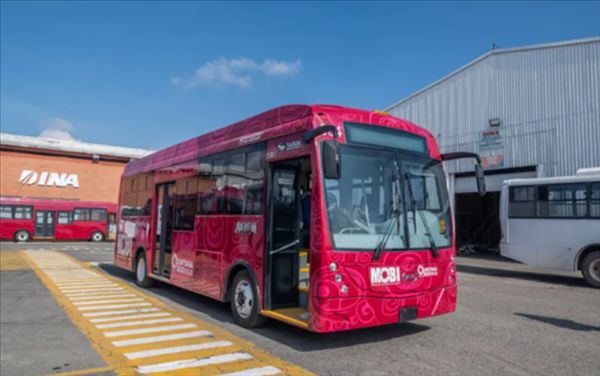
According to reports, facing Chinese electric buses holding over 80% of the local market share, Mexican legacy automaker DINA has boldly claimed that electric bus manufacturing is not a highly difficult engineering feat and that Mexico is fully capable of producing them independently.
To this end, the company has partnered with local collaborators to invest $60 million in launching the domestically produced electric bus Taruk, aiming to break through in the local industry. This bus has a single-charge range of 350 kilometers and is already in operation in Chetumal, with plans to enter Mexico City by 2027.
The planned annual production capacity is 5,000 to 6,000 units, with the current localization rate of components exceeding 70%, and a future target of raising it to 75%-80%. However, the power cells for these buses are supplied by China.
The power battery industry has extremely high entry barriers—it's not just about building a factory. It requires a complete system of lithium resource processing, cathode and anode materials, production equipment, and professional talent.
Through years of development, China has built a complete industrial chain spanning from mineral mining to battery recycling, commanding the vast majority of global power battery supply and leveraging economies of scale to keep production costs low.
For Mexico to build a complete battery industry chain from scratch would take at least five years, making it difficult to achieve cell self-sufficiency in the short term. Mexico's push for bus localization is driven not only by domestic industrial demands but also by external geopolitical factors.
As a key nearshoring base for the United States, if buses produced locally in Mexico are to be exported to the U.S. market, they must comply with the subsidy rules of the U.S. Inflation Reduction Act, which imposes strict restrictions on the sources of key battery components, forcing Mexico to accelerate the development of its local battery industry.
However, the practical challenge is that Mexico can currently only complete localized assembly of components like the body and chassis, and still finds it difficult to shake off its dependence on Chinese cells.
Related Articles
Huawei phone users have finally got what they've been waiting for! The HarmonyOS trial beta version of NetEase Cloud Music is now available.
about 4 hours ago
The price after discounts is 6544 yuan! Lenovo ThinkPad E14 2026 laptop is now available: Core 5 320 + 512GB
about 5 hours ago