BlackBerry, which long ago exited the smartphone scene, is thriving in the automotive industry.
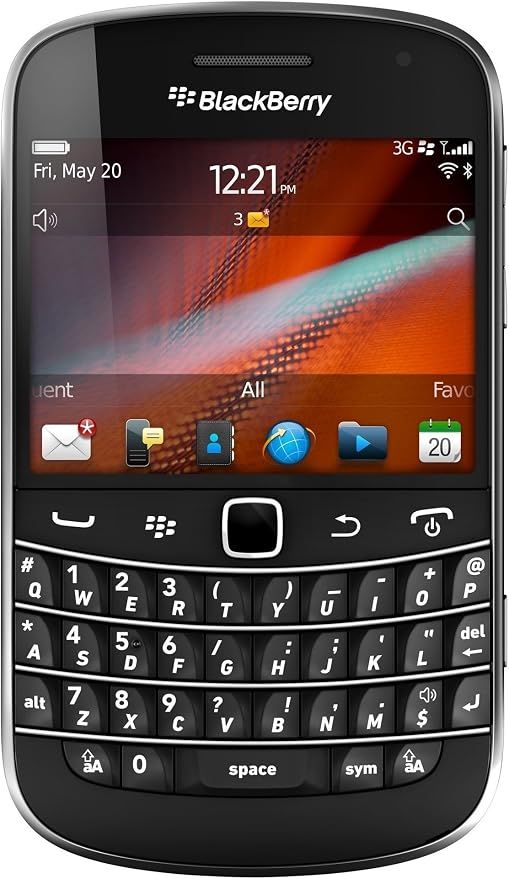
Who would have thought that BlackBerry, which stopped making phones long ago, is now thriving in the automotive space.
Yes, that BlackBerry—the one from the same era as Nokia, once ubiquitous on streets everywhere.
After smartphones arrived, BlackBerry got crushed by Apple and Android phones, and by 2016 it had completely abandoned its phone business. Everyone figured the company was basically done for, but not only did it survive, it's now doing better than ever.
BlackBerry's fiscal Q1 2027 (March 2026–May 2026) earnings show total revenue of $152.9 million, up 26% from $121.7 million in the same period last year, beating prior estimates.
Profits surged even more. Operating income jumped from $2 million a year ago to $15.3 million, and net income rose from $1.9 million to $8.5 million—a 347% increase.
And this is the first time in nine years that BlackBerry has turned cash flow positive in Q1.
Clearly, the company is in great shape. BlackBerry even highlighted a specific metric to showcase how well its business is performing.
It cites the "Rule of 40" in the software industry: if revenue growth rate plus profit margin equals or exceeds 40, the business is considered healthy, balancing profitability and growth. This quarter, both of BlackBerry's two main businesses—QNX and secure communications—met that threshold.
BlackBerry has clearly reinvented itself, and its successful transformation hinges on the QNX business.
QNX was born in the 1980s, originally called QUNIX. It's a Unix-like real-time operating system, similar to the Linux we're more familiar with.
In fact, QNX was already being used in cars as early as 1999. By 2008, major automakers including BMW, Daimler, and Ford were collaborating with QNX.
In 2010, BlackBerry acquired the company behind QNX, originally intending to use it for a phone operating system. They even released a tablet called the PlayBook, which ran on a tablet OS developed from QNX.
But as everyone knows, it couldn't compete with iOS and Android.
After BlackBerry's steady retreat in the phone market, it pivoted QNX back to the automotive sector. Leveraging the encryption and secure communication expertise it had built up in phones, BlackBerry transformed into a cybersecurity company.
QNX in vehicles isn't the same as what we typically call the infotainment system—it's the lower-level software beneath features like navigation and voice assistants. It runs directly on the chip, handling task scheduling, memory allocation, and hardware management as a real-time operating system.
This "real-time" capability is critical. If the infotainment system lags a bit, it's just annoying. But if the instrument cluster or autonomous driving systems are slow, that's a serious problem.
So systems like QNX are designed to ensure that tasks in a vehicle are completed within specified time constraints.
Another major feature of QNX—and where BlackBerry excels—is high security.
The automotive standard ISO 26262 defines four safety levels: ASIL-A, B, C, and D, from lowest to highest. Different components require different safety levels—for example, rear taillights only need ASIL-A, while airbags must meet ASIL-D.
QNX is based on a microkernel architecture, which divides the operating system into modules, each handling different service processes in isolation, making it inherently secure. Moreover, its platform and toolchains have all passed ASIL-D certification.
This means that as a supplier, it has already laid a solid safety foundation. When automakers develop using QNX's full toolkit, even if the software isn't inherently ASIL-D certified from the start, having a certified underlying system makes the safety certification process much easier.
Add to that QNX's early positioning in this space—it had already paved the way before the new energy vehicle boom.
And BlackBerry's underlying system is a "sticky" business. Once a new model is developed, switching underlying systems would require re-adapting chips, rewriting software, and going through safety validation again—too much hassle, and automakers generally won't put themselves through that.
So this business keeps generating steady revenue. BlackBerry reports that 24 of the world's top 25 EV makers use QNX. This includes direct partnerships with automakers like Mercedes-Benz and Volvo, as well as integration with Tier 1 suppliers like Nvidia and Desay SV to deliver products to OEMs.
Though I'm curious which one isn't using it.
Of course, as the foundation for software development, QNX isn't just used in cars—it also applies to medical devices, aerospace, rail transit, and other fields.
In the medical sector, for example, ventilators, patient monitors, and surgical robots all need software. QNX provides a foundational underlying platform, and device manufacturers develop their applications on top of it.
All together, QNX revenue accounted for 48.8% of BlackBerry's total last year. After the Q1 earnings release, management even raised their revenue outlook for this segment.
BlackBerry's other business—its core competency in secure communications—accounts for roughly 48% of revenue, roughly splitting the company in half with QNX.
This segment isn't really relevant to consumers though. It primarily serves government agencies and official institutions that have extremely high encryption requirements for communications.
After all, even Obama carried a BlackBerry—it's a family tradition.
And this part of the business has been relatively stable, mainly sustained by government contracts, so we won't dive deeper into it.
All in all, BlackBerry's story is pretty remarkable.
You could say it got beaten to a pulp in the phone industry—whether due to slow moves or short-sightedness.
But then it pivoted to automotive, and ended up at the forefront of the industry, becoming a leader in some sense.
Of course, times keep changing. In the wave of software-defined vehicles, many automakers have started developing their own lower-level systems in recent years—like NIO's SkyOS—which puts them in competition with underlying system suppliers like BlackBerry.
Whether BlackBerry can keep enjoying this slice of the pie, we'll just have to wait and see.
Related Articles
Starting at 1.388 million yuan, Zunjie S800 Grand Design Collection officially delivered
about 2 hours ago
6 out of every 10 electric vehicles are BYD! Chinese cars dominate overseas markets: foreigners queue up to take delivery.
2 days ago
BYD released its 2026 semi-annual financial report: exports surged 67.9% to nearly 790,000 vehicles!
3 days ago