Bezos confronts Musk! Amazon applies to launch 5105 satellites: ordinary mobile phones will directly connect to satellites by 2028
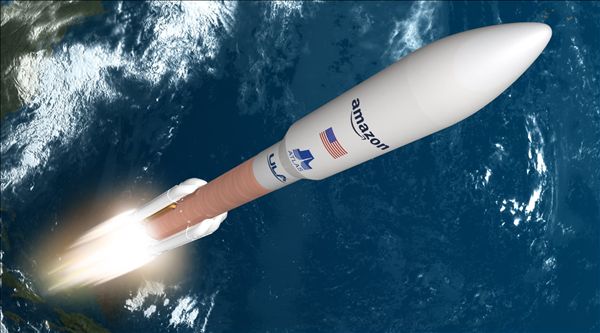
According to reports, Amazon's satellite internet business, Amazon Leo, filed an application with the U.S. Federal Communications Commission (FCC) on Monday, planning to deploy up to 5,105 low-earth orbit satellites to build a "Direct-to-Device" (D2D) communication network. This move is seen by the industry as Bezos directly challenging Musk's Starlink direct-to-phone service.
Amazon stated that the system will provide voice calls, text messages, data transmission, and emergency communication services for ordinary smartphones, without the need for dedicated terminals or modified devices. Deployment is expected to begin as early as 2028.
The application document states: "The company looks forward to realizing the vision of direct-to-device connectivity, enabling millions of people who live, travel, and work beyond the coverage of current traditional networks to also enjoy communication services."
It is understood that spectrum resources are a key bargaining chip in this competition. Amazon will leverage the radio spectrum resources obtained from the $11.6 billion acquisition of Globalstar in April to support this satellite constellation.
The acquisition was announced on April 14, purchasing all shares of Globalstar at $90 per share in cash, integrating its satellite network, spectrum resources, and operational team into the Amazon Leo landscape.
This marks Amazon's first foray into the satellite mobile communications field and signifies the extension of its satellite internet strategy from broadband access to direct-to-phone connectivity.
Amazon Leo, formerly known as "Project Kuiper," has already launched over 390 production satellites. The original constellation plan called for approximately 3,232 satellites. With the addition of these 5,105 D2D satellites, the overall constellation scale approaches 8,000 satellites (broadband satellites).
Amazon's entry will intensify the red-hot competition in the "Direct-to-Device" market, currently dominated by SpaceX's Starlink. Starlink has covered over 150 countries, with its Direct to Cell service having more than 650 satellites in orbit, covering 22 countries and supporting approximately 60 compatible phone models. Data services were launched in October last year, with users paying an additional $10 per month to use them.
Starlink's first-mover advantage is significant, but Amazon's approach is different. By acquiring Globalstar, Amazon has obtained high-quality terrestrial Mobile Satellite Service (MSS) spectrum bands, which perform better in penetrating buildings and obstructions, making them more suitable for direct-to-phone scenarios.
Amazon also plans to collaborate with global mobile operators to offer D2D services as a complementary extension to terrestrial cellular networks.
Related Articles

Huawei phone users have finally got what they've been waiting for! The HarmonyOS trial beta version of NetEase Cloud Music is now available.
about 4 hours ago
The price after discounts is 6544 yuan! Lenovo ThinkPad E14 2026 laptop is now available: Core 5 320 + 512GB
about 5 hours ago