10 years to complete form deployment! HarmonyOS PC usage time is now on par with Huawei's traditional Windows-based computers.
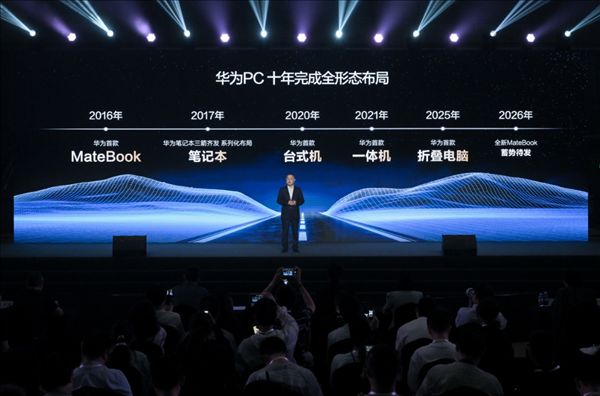
According to reports, in 2016, Huawei launched its first MateBook, officially entering the PC market, which was already mature in terms of competitive landscape. Today, Huawei has steadily completed a full decade of industrial layout in this sector.
After ten years of deep cultivation, Huawei has gradually developed a complete set of fully self-developed technical systems, including the Yun Sun architecture, Ark Engine, and HarmonyOS distributed system, accumulating more than 2,700 core patents related to hardware structures, screen technology, and cross-device connectivity. Its identity has also completely shifted from an initial single-product manufacturer to a technology R&D entity covering the entire chain.
According to the operational details shared by Zhu Dongdong, since the official launch of the first HarmonyOS computer in 2025, the system has pushed a total of 45 rounds of iterative optimization updates. Currently, the average daily usage time of HarmonyOS computers has matched that of Huawei's PC products based on traditional architecture, and related products have completed the critical leap from early small-scale pilot projects to today's large-scale commercial deployment.
At present, the number of native independent HarmonyOS applications has grown from over 1,000 at the initial release to more than 19,000. Common general-purpose displays, keyboards, and mouse peripherals have been adapted for over 1,700 models, while the number of adapted professional office peripherals such as printers and scanners has reached 1,600 models. The vast majority of common peripherals support plug-and-play functionality without requiring users to manually install additional drivers.
The vertical industry ecosystem has also formed stable and practical results: in the financial sector, full adaptation of quotation and trading software from leading brokerages has been completed; in the content creation field, the entire workflow of CapCut's cross-device material transfer and local AI rendering has been enabled; and for government and enterprise clients, a custom enterprise-specific version has been launched, supporting dual-space isolation, batch deployment, and tiered security management, fully adapting to digital office scenarios across multiple industries.
Zhu Dongdong stated that with the Qingyun HM650 desktop officially launching in the fourth quarter of this year, Huawei's PC R&D focus will continue to shift toward on-device AI, vertical industry ecosystems, and multi-form interaction technologies. Relying on this complete self-developed technology foundation, Huawei will continue to expand the productivity boundaries of PC devices, providing more differentiated and efficient digital office tools for three core user groups: individual consumers, enterprise clients, and professional creators.
Related Articles
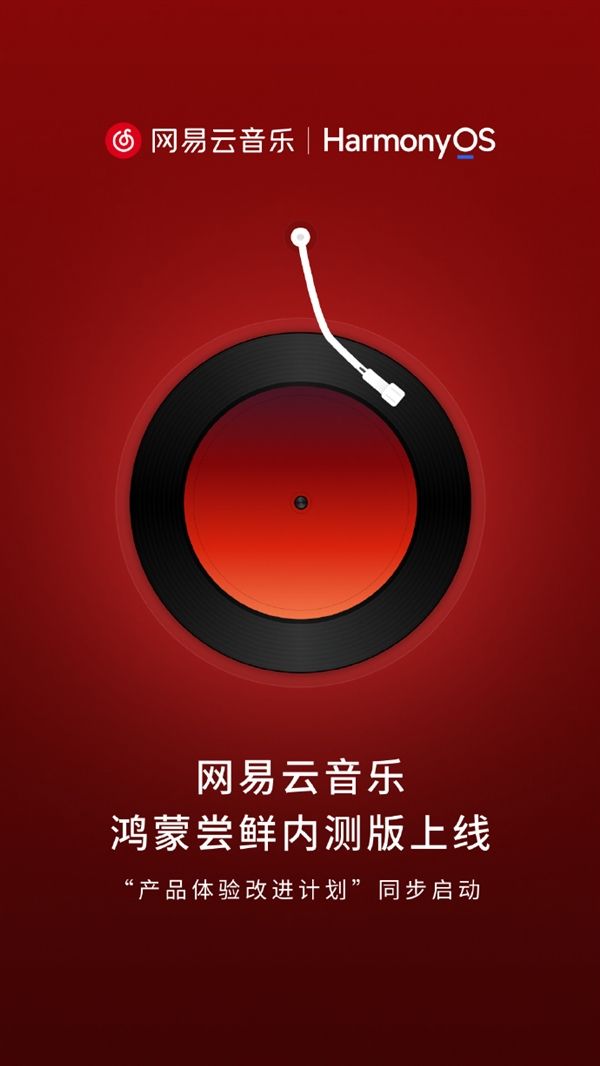
Huawei phone users have finally got what they've been waiting for! The HarmonyOS trial beta version of NetEase Cloud Music is now available.
about 4 hours ago
The price after discounts is 6544 yuan! Lenovo ThinkPad E14 2026 laptop is now available: Core 5 320 + 512GB
about 5 hours ago