
Turning off the lights and lying on your side while scrolling on your phone damages your eyes: causing irreversible harm to your vision.
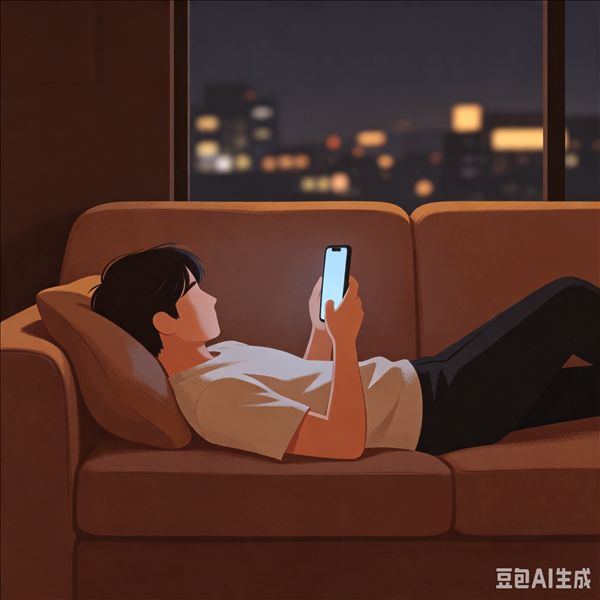
Many people have had this experience: lying on their side in the dark with the lights off, scrolling through their phone until their eyelids start drooping, yet still refusing to put it down. Everyone more or less knows that using a phone after turning off the lights is bad for the eyes, but when it comes to the specific harms, most can't really explain them. This vague awareness leads many people to take potential risks lightly.
Experts explain that in low-light conditions, the pupils naturally dilate. For people with certain eye structures—such as those with smaller eyeballs or narrower anterior chamber angles—this can disrupt the normal circulation of aqueous humor, causing a sudden spike in intraocular pressure and potentially triggering an acute attack of glaucoma. When this happens, it not only causes eye pain and headaches but can also lead to irreversible damage to vision.
According to available information, glaucoma is an irreversible blinding eye disease. Its primary mechanism is that pressure inside the eye becomes too high, exceeding what the eye can withstand, thereby damaging the optic nerve. Clinically, 10mmHg to 21mmHg is generally defined as the normal intraocular pressure range, and the stability of this pressure mainly depends on the balance of aqueous humor circulation.
Nowadays, most smartphones come with a built-in eye protection mode, and many people assume that turning it on means they're in the clear. In reality, the principle behind eye protection mode is usually to adjust screen brightness based on ambient light levels—for example, when the room darkens, the screen dims accordingly. In theory, this can help relax the nerves and ease the body into a sleep state.
But as mentioned earlier, this kind of dim environment isn't actually friendly to the eyes, and relying solely on eye protection mode to reduce risk isn't really practical. Beyond the lighting issue, the side-lying position itself is another major hazard.
When lying on your side, the distance between each eye and the screen is inconsistent. Over time, the difference in prescription between the two eyes can widen significantly, affecting normal stereoscopic vision. Meanwhile, the head often has to tilt at an angle to see the screen clearly, keeping the neck and shoulder muscles in a prolonged state of tension and twisting. Over time, this can lead to a straightening of the cervical spine's natural curve, causing neck and shoulder soreness, and even triggering cervical spondylosis.
So, the best approach is to avoid scrolling on your phone while lying on your side before bed as much as possible. If you really can't put the phone down, try to avoid the side-lying position, make sure both eyes stay at the same distance from the screen, and strictly limit your screen time.
Protecting your eyes and ensuring high-quality sleep matters far more than scrolling through your phone. Good eye habits are what truly reflect responsibility for your own health.
Related Articles

Huawei phone users have finally got what they've been waiting for! The HarmonyOS trial beta version of NetEase Cloud Music is now available.
about 4 hours ago
The price after discounts is 6544 yuan! Lenovo ThinkPad E14 2026 laptop is now available: Core 5 320 + 512GB
about 5 hours ago