China's RISC-V chip takes the global lead for the first time! SpacemiT's K3 chip enters mass production: already used in humanoid robots that completed a half marathon.
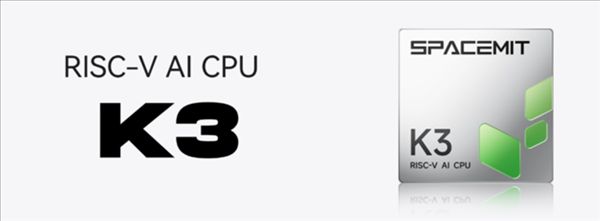
At the 5th Dishui Lake China RISC-V Industry Forum, Peng Huacheng, Marketing Director of SpacemiT, recently showcased the flagship chip K3.
The K3 is the world's first mass-produced RISC-V chip compliant with the RVA23 standard, marking the first time China's RISC-V chips have taken the global lead in standard implementation and industrialization progress.
The K3 adopts a RISC-V homogeneous fusion computing architecture, integrating 8 self-developed X100 high-performance CPU cores and 8 A100 ultra-wide parallel AI cores on a single chip. The CPU operates at a maximum frequency of 2.4GHz, with single-core performance comparable to ARM Cortex-A76.
The chip delivers 130K DMIPS of general-purpose computing power and 60TOPS of general-purpose AI computing power, enabling smooth local execution of large language models with 30 billion to 80 billion parameters. In real-world testing running Qwen 30B-A3B, the first token latency is only 0.9 seconds, generating approximately 15 tokens per second.
The K3 has achieved multiple world firsts in the RISC-V field: the first mass-produced chip compliant with the RVA23 standard, the first chip supporting 1024-bit RISC-V vector width, the first chip supporting native FP8 inference, and the first chip with complete support for chip-level virtualization.
Robotics is the primary application direction for the K3. The chip is specifically optimized for embodied intelligence, featuring 2 RISC-V real-time cores, 3MB of real-time computing cache, and 10 CAN-FD interfaces.
Multiple Linglong 2.0 humanoid robots equipped with the K3 chip participated in and completed the Beijing Yizhuang Half Marathon. Additionally, the K3 is already in use at the two national humanoid robot innovation centers in Beijing and Shanghai.
In terms of ecosystem support, the K3's code was submitted to the Linux official community mainline upon release. Major operating systems including Ubuntu, OpenKylin, and OpenEuler all support it, with GCC and LLVM having undergone targeted optimization.
According to SpacemiT, the K3 has already secured orders from international customers, covering single-board computers and computing cluster servers.
Related Articles
Huawei phone users have finally got what they've been waiting for! The HarmonyOS trial beta version of NetEase Cloud Music is now available.
about 4 hours ago
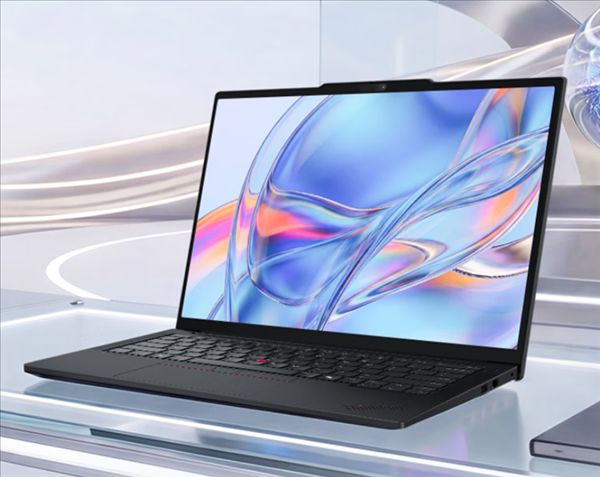
The price after discounts is 6544 yuan! Lenovo ThinkPad E14 2026 laptop is now available: Core 5 320 + 512GB
about 5 hours ago