32-core + 512MB 3D cache Zen7 Ryzen clocks hit 7.2GHz: Zen8 to undergo major overhaul
AMD unveiled its future Zen architecture roadmap at its AI event in late July, confirming Zen 7 and Zen 8, with the new architecture platform set for long-term development and upgrades.
The Zen 6 architecture processors upgrade to the 2nm N2 process node, with the EPYC version already launched, and the Zen 6 Ryzen expected early next year. This generation mainly improves on the current Zen 5 foundation, addressing some previous issues, with a redesigned memory controller, low-latency interconnect chip, and increased core counts.
Well-known leaker @MLID recently shared details on the Zen 7 EPYC, featuring an upgrade to the equivalent 1.4nm A14 process, up to 384 cores, and a 15-25% IPC improvement.
Now, in his latest blog post, he has revealed information about the Zen 7 Ryzen, with up to 32 cores and 64 threads. The 3D cache version will also see a significant capacity increase, with each core equivalent to 16MB of 3D cache, totaling 512MB—compared to the current 9950X3D2's 192MB.
Additionally, the CPU frequency for Zen 7 architecture will continue to push higher, exceeding 7.2GHz. In previous leaks, many may recall that Zen 6 architecture frequencies were rumored to surpass 7GHz, but with this new leak, it seems the Zen 6 Ryzen frequencies won't be that high, with an estimated cap around 6.5GHz.
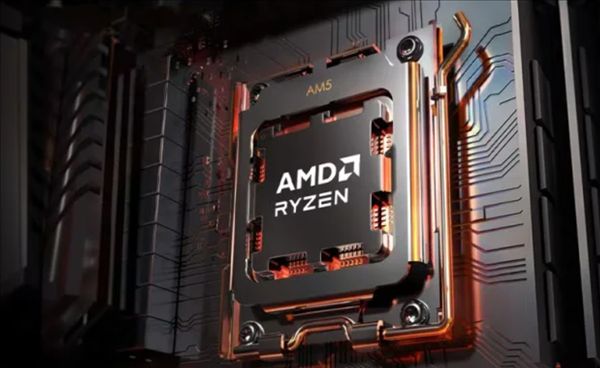
Zen 6 and Zen 7 will continue to use the current AM5 socket, supporting PCIe 5.0 and DDR5. The socket change won't happen until the Zen 8 generation, which will upgrade to the AM6 socket, supporting DDR6 and PCIe 6.0.
From Zen 7 through Zen 8, AMD believes CPU compute loads will gradually shift toward AI, so these architectures will incorporate more optimization for local AI computation, with this being even more pronounced in Zen 8.
However, this also means the overall platform cost for Zen 8 will be higher. MLID mentioned that it would require high-end motherboards, such as models priced at $500-600 or more, along with high-spec memory, to build a local high-performance workstation platform capable of handling next-generation complex AI tasks.
Based on the timeline, the Zen 7 architecture is expected to debut in 2028, while Zen 8 may use TSMC's A10 process and won't arrive until 2030. Moreover, the EPYC version will come first, with the Ryzen version likely delayed by half a year to early the following year, such as launches at CES in 2029 and 2031.
Related Articles

Huawei phone users have finally got what they've been waiting for! The HarmonyOS trial beta version of NetEase Cloud Music is now available.
about 4 hours ago
The price after discounts is 6544 yuan! Lenovo ThinkPad E14 2026 laptop is now available: Core 5 320 + 512GB
about 5 hours ago