ChangXin Memory Technologies is worth more than 3 trillion.
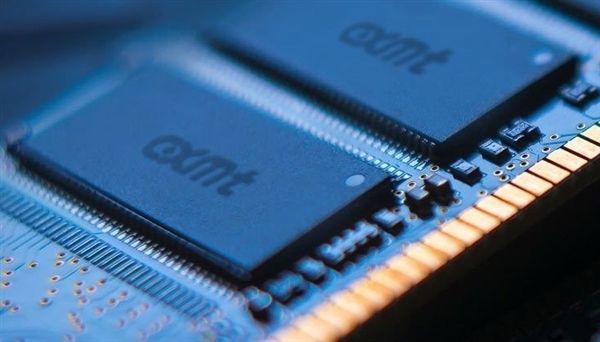
Today is a historic moment.
On July 27, ChangXin Memory Technologies (CXMT) debuted on the STAR Market, marking not just an IPO but a milestone for China's DRAM memory industry.
On its first day of trading, CXMT opened 471.59% higher at 49.5 yuan, with an aggregated opening auction turnover exceeding 15.2 billion yuan. The company's market capitalization reached 3.31 trillion yuan, ranking first among A-share stocks.
As of midday, CXMT's market cap had reached 3.66 trillion yuan.
Before CXMT's listing, overseas memory giants Samsung, SK Hynix, and Micron saw their stock prices adjust. Since July, SK Hynix and Samsung Electronics' shares have fallen 31.3% and 20.7%, respectively.
The capital market originally expected CXMT to list amid a "memory super-cycle" narrative, only to see overseas memory giants drop like this. However, the capital market is now voting with its feet, expressing confidence in CXMT's future development.
So, how high is CXMT's ceiling? What is a reasonable valuation for CXMT?
I. Liquidity Premium Boosts Valuation
Miaotou believes that the real factor driving CXMT's stock price increase on the first day was the liquidity premium—meaning many investors were interested in participating, but the free float was small.
On its first trading day, only 6.73% of CXMT's shares (approximately 4.503 billion shares) were tradable, with over 93% locked up. Among these, some strategic investors like social security funds will not see their shares unlocked until July 2027, while original shareholders and certain industry capital have lock-in periods of up to 36 months.
Additionally, all strategic placement in this IPO was from domestic institutions, with no foreign capital introduced. Due to STAR Market access rules, overseas institutions could not participate in the primary IPO subscription. If they want to invest, they would likely have to trade in the secondary market via the QFII channel.
The extremely high proportion of locked-up shares meant that many funds outside the primary market could not get allocations, forcing them to participate in the secondary market, creating a liquidity premium for CXMT in its early trading days.
All strategic investors subscribed at the offering price of 8.66 yuan per share, with lock-up periods ranging from 12 to 36 months (most funds locked for 12-18 months). The mainstream market view is that long-term funds are willing to accept extended lock-ups, reflecting institutional belief that the 8.66 yuan issue price offers medium- to long-term value.
Notably, the abandonment rate for CXMT's online IPO tranche was only 0.17%, reflecting strong market recognition of the domestic memory track. For context, in 2023, abandonment rates for some STAR Market new stocks commonly reached 5-10%.
In terms of market sentiment, most institutions and individual investors are fairly optimistic about CXMT's post-listing performance.
Moreover, prior to the listing, many institutions were sending positive signals about CXMT.
For example, the final issue price for CXMT's IPO was 8.66 yuan per share. In the IPO book-building process, the lowest institutional subscription bid was 7.26 yuan per share, while the highest reached 65.19 yuan per share. At the highest bid of 65.19 yuan, the company's theoretical market cap would be 4.36 trillion yuan.
However, according to Miaotou's incomplete statistics, most institutions bidding for the IPO priced shares above 8.8 yuan. Therefore, Miaotou believes that the 65.19 yuan bid was a signal from some institutions expressing bullishness to the capital market.
In short, against a backdrop of scarce liquidity and widespread optimism, CXMT's first-day valuation exceeding 3 trillion yuan falls within market expectations.
Once sentiment cools, how should we view CXMT's valuation?
Still a Cyclical Stock
Investment guru Benjamin Graham once said, "In the short run, the market is a voting machine, but in the long run, it is a weighing machine."
As the world's fourth-largest and China's largest DRAM memory chip company, and the fourth-largest DRAM manufacturer globally, CXMT's growth is directly tied to the DRAM memory cycle.
The DRAM memory industry has two distinct characteristics:
On one hand, DRAM is a standardized commodity whose prices fluctuate sharply with supply and demand, exhibiting strong cyclicality;
On the other hand, the DRAM industry has high entry barriers, with significant capital and technology hurdles.
We can see that CXMT's financial curve is almost a mirror image of DRAM price trends.
According to CXMT's prospectus, from 2023 to 2025, the company's revenue grew from 9.087 billion yuan to 24.178 billion yuan and 61.799 billion yuan. During the same period, net profit attributable to shareholders was -16.340 billion yuan, -7.145 billion yuan, and 1.875 billion yuan, respectively. In three years, it went from huge losses to profitability.
The 2023 loss is particularly telling. That year, DRAM prices hit a cyclical trough, while CXMT was in a capacity ramp-up phase with high depreciation and low selling prices, squeezing margins. The 16.34 billion yuan loss was the result of the industry cycle combined with the IDM business model.
The change in profitability is even more striking. The gross margin was only 5.58% in 2024 but jumped to 40.99% in 2025. Net cash from operating activities rose from approximately 6.897 billion yuan to 36.520 billion yuan.
During a price upcycle, the operating leverage of asset-heavy companies can rapidly amplify returns.
The real breakout came in 2026. First-quarter revenue reached 50.8 billion yuan, up 719.1% year-on-year. According to CXMT's prospectus performance forecast, the company expects first-half revenue of 110 billion to 120 billion yuan, and net profit attributable to shareholders of 50 billion to 57 billion yuan. In just half a year, revenue nearly doubled that of the previous full year.
If we extrapolate the full-year profit based on the first-half 2026 forecast, CXMT's dynamic P/E at the issue price would be about 5 times, and its P/B about 3 times. The issue P/E of 308.92 times is a distorted figure and does not represent CXMT's current valuation level.
However, it is worth noting that under cyclical stock valuation models, a declining P/E ratio is precisely the most typical valuation trap for cyclical stocks. Profits at the peak of the cycle tend to be the highest, and the P/E calculated using peak earnings is naturally low.
Looking at recent stock price trends for Samsung Electronics and SK Hynix, their P/E (2026E) stand at 6.3 and 7.9 respectively, yet their share prices remain weak.
Although AI has provided strong growth momentum for memory companies, the capital market still classifies memory firms like Samsung Electronics and SK Hynix as cyclical stocks.
So, some investors may ask: Is it possible for CXMT to break free from the cyclical stock valuation framework?
Focus on Growth First, Then Cyclicality
Miaotou believes that CXMT will still be valued as a cyclical stock, but due to domestic substitution and scale effects, it may achieve a valuation higher than the industry average, similar to CATL's case.
The lithium battery industry also has cyclicality. CATL, through scale effects and bargaining power in the supply chain, can remain profitable at the bottom of the industry cycle, but the capital market awards it a valuation above the industry average.
In other words, profitability determines the valuation floor.
Looking at CATL's market cap performance, during the last lithium battery downcycle, CATL's "resilience" was stronger than other lithium battery companies. And in the current upcycle driven by booming energy storage, CATL has reached new market cap highs, while EVE Energy and Penghui Energy have not.
According to consensus estimates from Wind, CXMT is expected to achieve net profit attributable to shareholders of 215.279 billion yuan in 2027 and 314.420 billion yuan in 2028, representing year-on-year growth of 57.78% and 46.05%. Based on these forecasts, CXMT may be able to achieve a valuation higher than the industry average.
That is, the significant valuation corrections seen in overseas and A-share memory companies may not necessarily occur for CXMT.
On the other hand, breakthroughs in HBM technology are also a key factor in boosting its valuation. Compared to DRAM, HBM has higher manufacturing process requirements and can support higher-performance GPUs.
If CXMT makes progress in HBM, the capital market will likely give it a higher premium. Additionally, unlike DRAM, HBM is not a standardized product; it requires co-development with GPU manufacturers, offering room for customization, which could weaken its cyclical nature and enhance its growth attributes.
Furthermore, CXMT is unlikely to remain content with being the world's fourth-largest; its production capacity will gradually move closer to that of Samsung, SK Hynix, and Micron.
In terms of absolute capacity, the three major manufacturers had a combined annual capacity of approximately 17.16 million wafers (12-inch) in 2025, with Samsung at 7.59 million, SK Hynix at 5.97 million, and Micron at 3.60 million. CXMT's annual capacity in 2025 was about 2.73 million wafers.
But the key difference lies in growth rates. The combined capacity of the three major manufacturers is expected to expand to 18.01 million wafers in 2026, a mere 5% increase. In contrast, CXMT's target monthly capacity by end-2026 is 350,000 wafers (annualized ~4.2 million wafers), close to Micron's approximately 385,000 wafers per month.
Currently, Micron has surpassed a trillion-dollar market cap. However, CXMT is still catching up in HBM, so it cannot yet be compared to Micron's trillion-dollar valuation. If we apply a 66.67% discount, CXMT's market cap could reach 4.5 trillion yuan.
Therefore, Miaotou believes that before reaching a market cap of 4.5 trillion yuan, the capital market should focus more on CXMT's growth potential. After reaching 4.5 trillion yuan, the impact of cyclicality on CXMT should be considered.
Related Articles
Huawei phone users have finally got what they've been waiting for! The HarmonyOS trial beta version of NetEase Cloud Music is now available.
about 3 hours ago
The price after discounts is 6544 yuan! Lenovo ThinkPad E14 2026 laptop is now available: Core 5 320 + 512GB
about 4 hours ago